Promising technologies don’t perform identically at every port. Local factors — operating procedures, digital systems, data availability, institutional responsibilities, staff capacity — determine whether a solution can actually be implemented and sustained past its initial rollout.
Technology demonstrations exist to test this. Rather than assessing a solution on paper, they show how it performs under real conditions: with real organisations, real data constraints and real operational pressures.
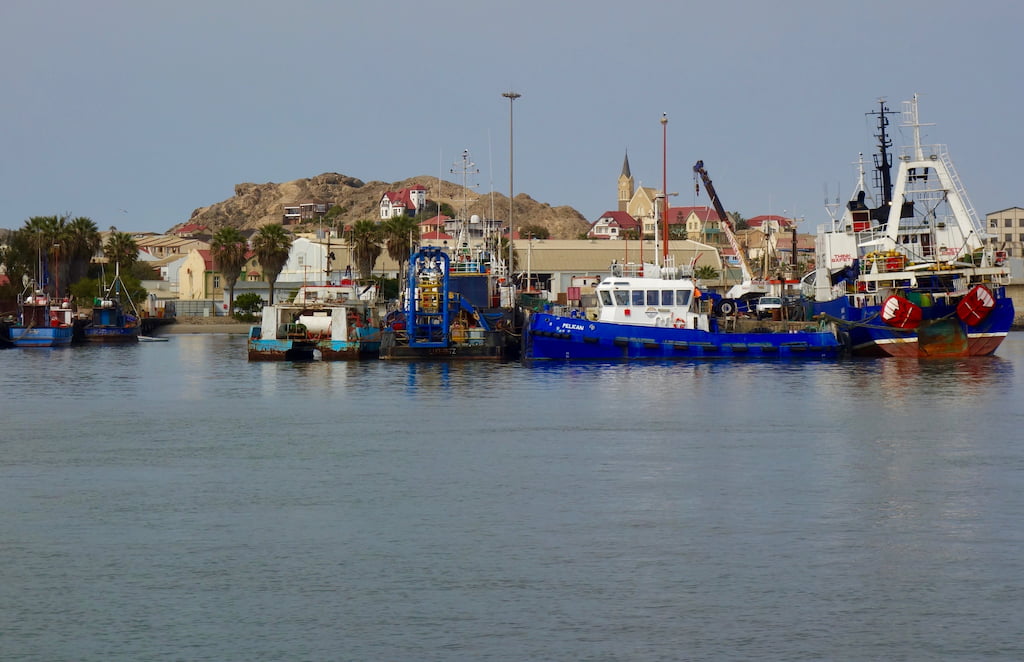
The demonstration at Namibia’s ports of Walvis Bay and Lüderitz is being implemented under the International Maritime Organization’s Global Maritime Technology Cooperation Centres Network Phase II (GMN II) Project, funded by the European Union, as part of its Port Call Upcycling (PCU) pilot. This framework allows the implementation process, operational effects and practical requirements of port-call data sharing to be documented and shared across the wider maritime sector.
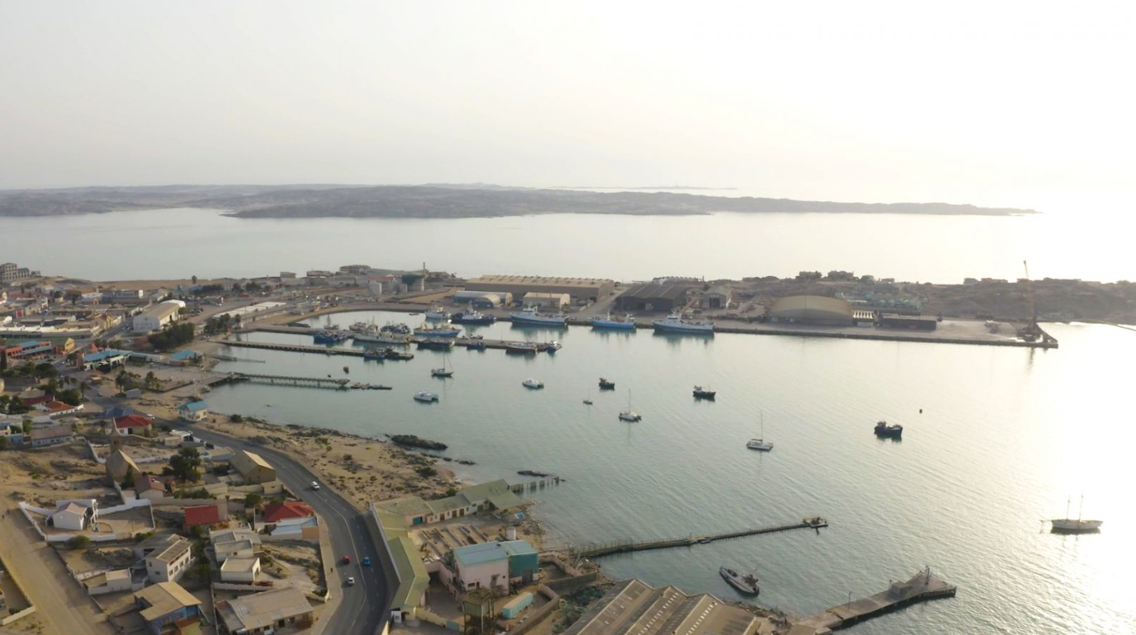
The demonstration will test the approach in the different operational environments of Walvis Bay (pictured) and Lüderitz. Source: NAMPORT
From platform to operational system
Port-call data-sharing platforms give the organisations involved in a vessel call — port authorities, terminal operators, pilots, tug operators, mooring teams, shipping agents and vessels — access to more timely and consistent operational information. A shared operational picture, in principle, supports coordination and cuts down on the inefficiencies that arise when participants work from different or outdated data.
But deploying a digital platform doesn’t guarantee that information will be available, accurate or consistently used. Each operating environment raises its own questions: Can the platform integrate with existing port systems? Is the required data available in a usable format? Which organisations are responsible for providing and updating it? Do operational staff have the time, skills and authority to use the system effectively? How should data be governed and shared between participants?
The Namibia pilot will work through these questions at Walvis Bay and Lüderitz specifically. Testing at two ports that differ in scale, activity profile and stakeholder arrangements will also show how local context shapes implementation.
The Port Call Upcycling initiative
The IMO GMN II Port Call Upcycling initiative is the broader framework behind the demonstration. Its role goes beyond supporting a technology installation: it brings together international, regional and national organisations to assess how port-call solutions can be introduced, monitored and evaluated in practice, linking individual demonstrations to a wider process of technical cooperation and knowledge exchange.
Through the initiative, findings from Walvis Bay and Lüderitz — technical results, operational experience, training requirements, institutional lessons, and challenges in stakeholder engagement — can be shared with other ports and maritime administrations, particularly through MTCC Africa’s regional networks.
That connection doesn’t imply direct replicability. Every port has its own operational model, existing systems and institutional arrangements, and any future application would need its own assessment of local conditions. Part of the demonstration’s value lies in identifying what transfers and what needs local adaptation — a distinction that only rigorous documentation of both implementation and outcomes can establish.
What the demonstration will examine
For the purposes of the demonstration, the project will deploy Posidonia Operations, including its Port Call Optimization (PCO) module, at Walvis Bay and Lüderitz. The platform supports the exchange of information at key stages of a vessel call: expected and actual arrival times, berth readiness, pilotage, cargo operations and departure preparations.
The demonstration will test whether this information can be consolidated and made available to relevant participants in a way that supports operational decision-making, and how well the platform fits existing working practices. Port calls depend on coordination across multiple organisations, so the usefulness of any digital system hinges on the quality and timeliness of the data contributed, active participation from the port community, and whether information gets built into everyday planning rather than running alongside it.
Training and capacity building are therefore central to implementation, not an add-on. Staff need to understand not just how to use the platform, but why particular data are required and how their contributions affect other participants in the call.
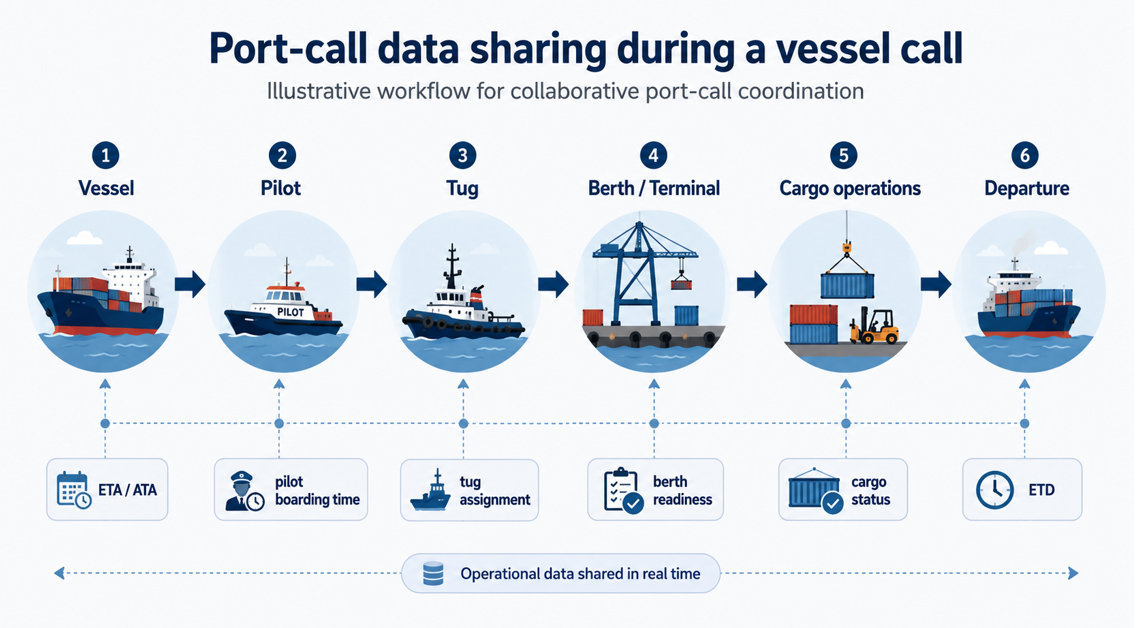
Illustrative port-call workflow showing how operational data can be shared across key stages of a vessel call, from arrival and pilotage through berth readiness, cargo operations and departure.
Establishing the evidence base
A central objective is to assess whether the technology produces observable changes in port-call operations. To do this, the project will establish a baseline describing existing processes and relevant operational indicators before deployment. Data collected during the demonstration will then be compared against this baseline across indicators such as vessel waiting time, idle time, the accuracy of estimated event times, and the coordination of port services. The assessment will also examine whether operational changes correspond to changes in fuel consumption or greenhouse-gas emissions.
Conclusions will need care. Port operations are shaped by factors that have nothing to do with any digital platform — weather, vessel schedules, cargo requirements, berth availability, unexpected disruptions. The project will need sufficient data and a structured evaluation methodology before attributing observed changes to the technology itself. At this stage, the demonstration is examining the platform’s potential contribution to operational efficiency; any emissions effects will need to be separately measured and validated.
Learning from the implementation process
The project’s outputs will extend beyond operational indicators. The implementation process itself generates evidence that’s often as valuable as the performance data: how the platform integrates with existing port systems; how responsibility for providing and validating data is defined; how port-community stakeholders are engaged; how different levels of digital maturity affect adoption; how training needs are identified and addressed; how data access and information-sharing are governed; and what it takes to maintain the solution once the demonstration period ends.
Documenting these factors lets the project assess not just whether the technology works technically, but what organisational and institutional conditions are needed to use it sustainably. A platform can operate successfully on a technical level while still running into real organisational barriers. Equally, limitations that surface during the pilot may point to where processes, training, system configuration or other aspects of implementation require adjustment. Drawing that distinction clearly is one of the demonstration’s primary objectives.
From local evidence to wider application
The Namibia demonstration will produce a case study grounded in the specific conditions of Walvis Bay and Lüderitz. Its wider value will depend on the quality of the evidence collected and the rigour with which the project documents both achievements and limitations.
The results may help other ports understand the data requirements, systems integration, governance arrangements and organisational capacity that port-call data sharing demands. They may also help identify which port environments are best suited to collaborative decision-making approaches, and the conditions under which their benefits are most likely to materialise.
The goal isn’t to present the Namibia model as a universal template, but to generate practical, documented evidence that supports better-informed decisions elsewhere. Through the Port Call Upcycling initiative, that evidence connects local implementation experience in Namibia to a broader process of maritime technical cooperation — and its contribution will be measured not only by how the platform performs, but by what the project learns about introducing, evaluating and sustaining collaborative port-call technology across ports in developing countries.
CENIT’S role in the project
Within the pilot, CIMNE’s transport innovation unit CENIT is leading the research, validation and dissemination activities. Its role is to establish the evidence needed to assess the demonstration, including defining the baseline conditions at Walvis Bay and Lüderitz, developing indicators for operational and environmental performance, and analysing whether observed changes in port-call operations, fuel use and greenhouse-gas emissions can be associated with the introduction of the digital platform.
CENIT will also continue monitoring the platform during the subsequent support phase, contribute evidence to the project’s business case, and coordinate communication and knowledge-sharing so that the lessons generated can inform other ports considering similar approaches.