CENIT, the Innovation Unit in Transport at CIMNE, is leading the research, validation and dissemination activities for the digital port call pilot being implemented at the Ports of Walvis Bay and Lüderitz in Namibia.
The pilot forms part of the Global MTCC Network Phase II (GMN II) project, implemented by the International Maritime Organization (IMO) and funded by the European Union.
Working alongside Prodevelop S.L., local partner WKN Trading Enterprise CC, the Namibian Ports Authority and MTCC Africa, CENIT will develop the methods needed to assess how the digital platform performs during operational use.
The project will deploy Prodevelop’s POSIDONIA OPERATIONS platform, including its Posidonia Operations PCO module, to support the exchange of port call information between port authorities, terminal operators, shipping agents, pilots, tugboat companies and other stakeholders.
While Prodevelop is responsible for the platform’s technical deployment and integration, CENIT’s role is to establish the evidence needed to evaluate the pilot. This includes defining the starting conditions, selecting appropriate indicators and analysing whether changes can be observed following implementation.
The research will cover both operational performance and associated greenhouse-gas emissions. Any conclusions will be based on data collected during the project and assessed against an agreed baseline.
“ The purpose of our work is to provide a clear and consistent framework for assessing the pilot results. We first need to understand existing port call operations and then assess how and to what extent the introduction of the platform has changed them.”
— Evgenii Pronin, Project Manager, CENIT
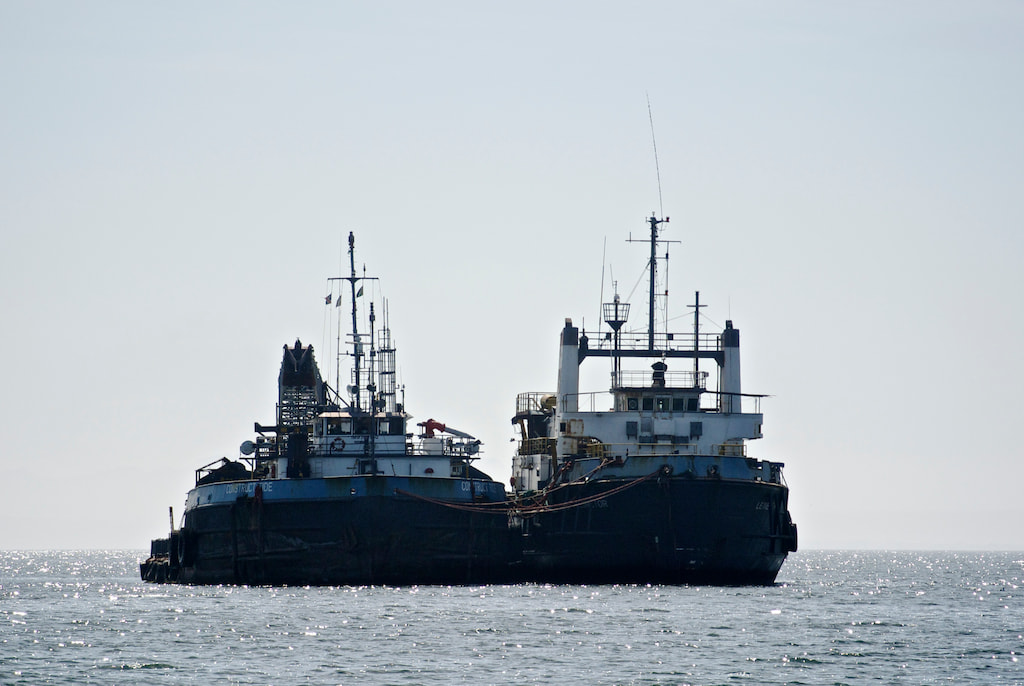
Vessels off Walvis Bay, Namibia. The pilot will establish a baseline for port call operations and assess indicators including vessel waiting and idle time during the demonstration period. Source: Wikicommons Media
Establishing the baseline
A central part of CENIT’s work will be establishing a baseline for vessel calls at Walvis Bay and Lüderitz.
The baseline will describe relevant conditions before the Posidonia Operations PCO platform becomes operational. This will provide a reference against which information collected during the demonstration can be compared.
The work is expected to draw on available vessel call and operational data from both ports. Depending on data availability and quality, this may include vessel arrival and departure times, anchorage periods, time spent waiting or manoeuvring, berth occupation and the timing of activities such as pilotage, tug assistance and mooring.
Information on vessel characteristics and operating conditions will also be required to estimate fuel consumption and emissions during the relevant stages of a port call.
The purpose of the baseline is not only to produce an initial emissions estimate. It will also help the team understand how port calls are currently recorded, which data are available and where limitations or gaps may affect the subsequent assessment.
Defining indicators for the pilot
CENIT will develop a monitoring framework covering operational, environmental and wider project effects.
Operational indicators may include vessel waiting and idle time, port call duration, the difference between estimated and actual event times, and the availability and timeliness of data shared through the platform.
The project will also monitor whether the system supports more consistent coordination between the organisations involved in vessel calls. Relevant factors may include the completeness of information, participation by port stakeholders and the use of updated event times in operational planning.
Environmental assessment will focus on estimating whether observed changes in vessel activity are associated with changes in fuel consumption and emissions.
The final indicators and calculation procedures will be confirmed through the project’s methodological work and will depend partly on the operational data available at each port.
Linking port operations and emissions
The project’s underlying approach is that changes in port call coordination may affect how long vessels spend waiting, manoeuvring or operating at berth.
Where a change in operating time is identified, CENIT will examine whether it can be translated into an estimated change in fuel use and associated emissions.
This assessment requires more than applying a single standard value. Fuel use can vary according to vessel type, size, engine characteristics, operating mode and the duration of the activity being assessed. Using the Posidonia Operations PCO platform, CENIT will therefore combine vessel and operational information with recognised emissions-calculation methods.
The analysis will also need to distinguish between different stages of the port call. Time spent at anchor, manoeuvring or alongside a berth may involve different machinery, engine loads and fuel-consumption patterns.
The resulting figures will be compared with the baseline to assess whether there is evidence of a change during the demonstration period.
“A digital platform does not produce an emissions reduction simply by being installed. Any environmental effect must be connected to an observable operational change and supported by sufficient data. Our role is to assess that relationship and report the findings with the appropriate level of confidence.”
— Evgenii Pronin, Project Manager, CENIT
Accounting for normal variations in port activity
Port calls take place in a changing operational environment.
Waiting times and vessel schedules can be affected by weather, cargo requirements, congestion, berth availability, technical incidents and delays originating earlier in a vessel’s voyage. Differences between two vessel calls may therefore result from several factors.
CENIT’s assessment will consider these circumstances when interpreting the project data. An improvement recorded during one vessel call would not, on its own, demonstrate that the platform was responsible.
The analysis will require a sufficiently broad dataset and consistent information over time. It will also consider whether any patterns observed are supported across multiple vessel calls and whether other explanations may have contributed to the results.
This cautious approach is important to ensure that the project distinguishes between its objectives, preliminary observations and validated findings.
Working with technical and operational partners
CENIT’s research activities will be closely connected to the platform implementation.
Prodevelop will configure the system, connect the relevant data sources and support operational users. NAMPORT will provide access to port information and practical knowledge of vessel call processes at Walvis Bay and Lüderitz.
WKN Trading Enterprise CC will support local coordination and knowledge transfer, while MTCC Africa will help connect the project with regional stakeholders and wider knowledge-sharing activities.
CENIT will work with these partners to identify the data required for the assessment, confirm its meaning and quality, and ensure that information generated by the platform can be used appropriately within the evaluation.
Feedback from port personnel and other users will also be relevant. Quantitative data can show whether operational timings change, but discussions with users can help explain how the platform is being used, what difficulties arise and whether working practices are adapting.
Assessing wider project effects
In addition to operational and environmental indicators, the project will consider the organisational conditions required to introduce and maintain the platform.
These may include staff capacity, stakeholder participation, data-management responsibilities, technical infrastructure and the resources required for continued operation.
CENIT will contribute to the project’s business case by examining the evidence gathered during the pilot and identifying the factors that would need to be considered before continued or wider use.
The project will not assume that the same approach can be applied unchanged in every port. Walvis Bay and Lüderitz have their own operating conditions, systems and stakeholder arrangements. Any future application elsewhere would require a separate assessment of local needs and available resources.
Communicating the results
The International Centre for Numerical Methods in Engineering (CIMNE), through CENIT, is also responsible for coordinating the project’s communication and dissemination activities.
During implementation, this will include articles, LinkedIn posts, visual materials and updates describing the project’s activities, partners and technical approach. As data become available, communication will progressively focus on implementation experience, operational lessons and validated findings.
CENIT will also support technical publications, conference presentations and knowledge-sharing activities aimed at professional and institutional audiences.
The communication approach will distinguish clearly between anticipated benefits and demonstrated results. Preliminary observations will be identified as such, while emissions findings will be communicated once the necessary data have been collected, assessed and validated.
“Transparent communication is part of the evaluation process. We need to explain what the project is testing, what the data show and where uncertainty remains. This will make the findings more useful to NAMPORT, the project partners and other ports considering similar approaches.”
— Evgenii Pronin, Project Manager, CENIT
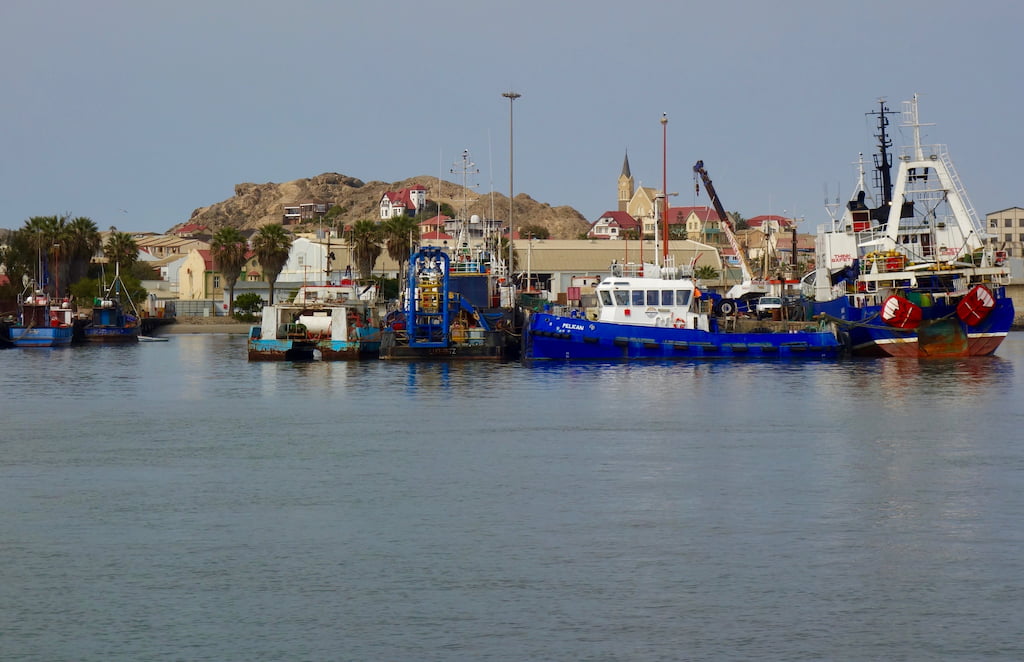
Lüderitz Harbour, one of the two Namibian ports included in the pilot. CENIT will assess operational data from Walvis Bay and Lüderitz to examine how port call performance changes during implementation. Source: Wikicommons Media
From data to practical lessons
CENIT’s work will not be limited to the initial operational demonstration of the digital platform. Following the Operational Demonstration phase, the project will include a Monitoring and Support phase, during which CENIT will continue to carry out periodic assessments of how the platform is being used and what effects can be observed in port call performance, fuel use and GHG emissions.
These assessments will help determine how changes in vessel waiting time, manoeuvring time, port call coordination and operational predictability evolve over time, and to what extent they can be associated with the use of the digital platform. This will allow the project to move beyond a one-off demonstration and build a more robust understanding of the platform’s practical contribution under real operating conditions.
The evidence generated during both the Operational Demonstration phase and the subsequent Monitoring and Support phase will support the final evaluation of the project and the business case for future scale-up or replication. It will also provide practical lessons for other ports considering digital port call coordination, while recognising that the results will reflect the specific operating environments of Walvis Bay and Lüderitz.
CENIT’s role is therefore to ensure that the pilot produces not only a functioning technology demonstration, but also a structured and periodically updated assessment of its operational, environmental and methodological results during implementation, operational use and subsequent monitoring.