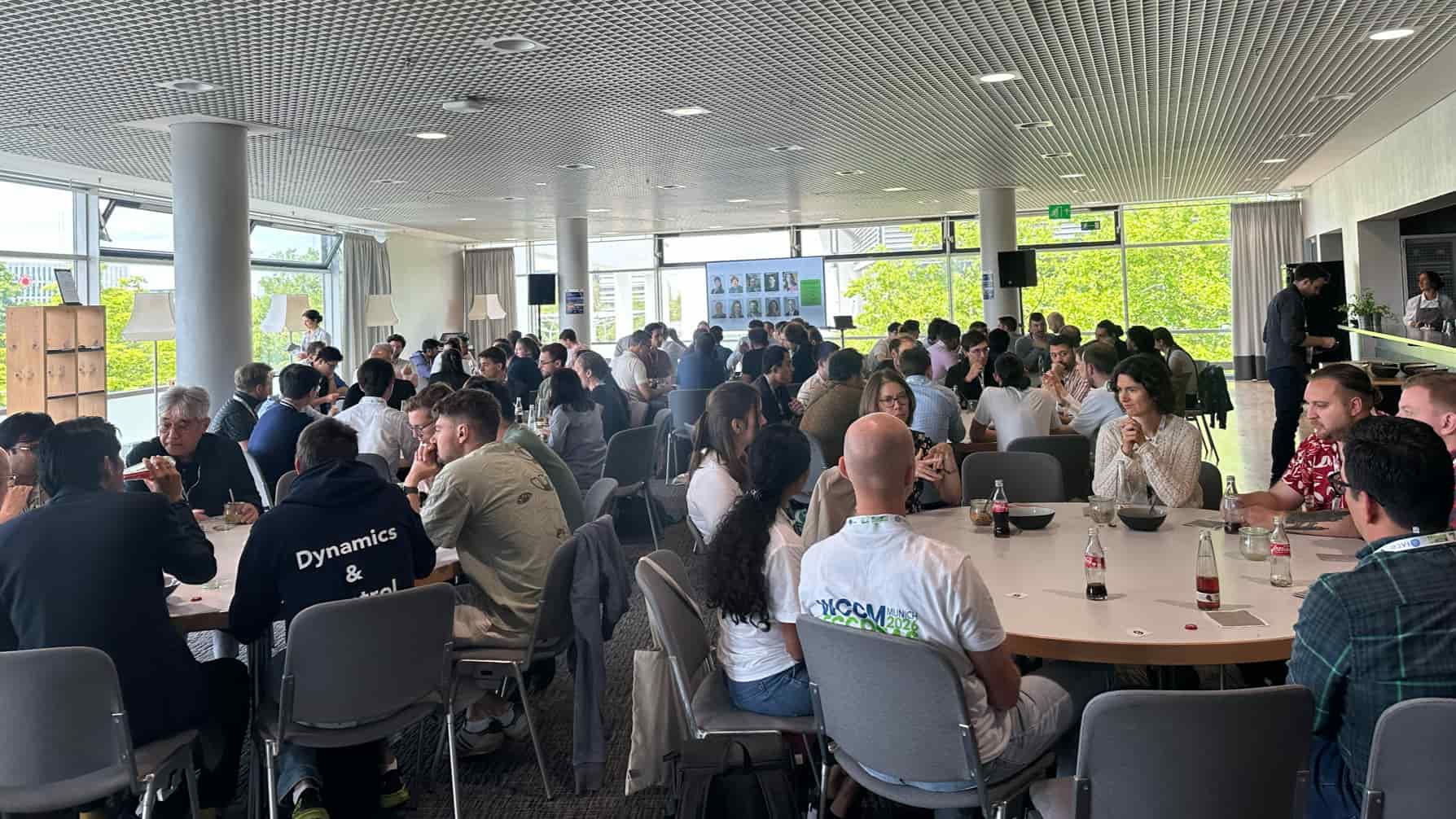
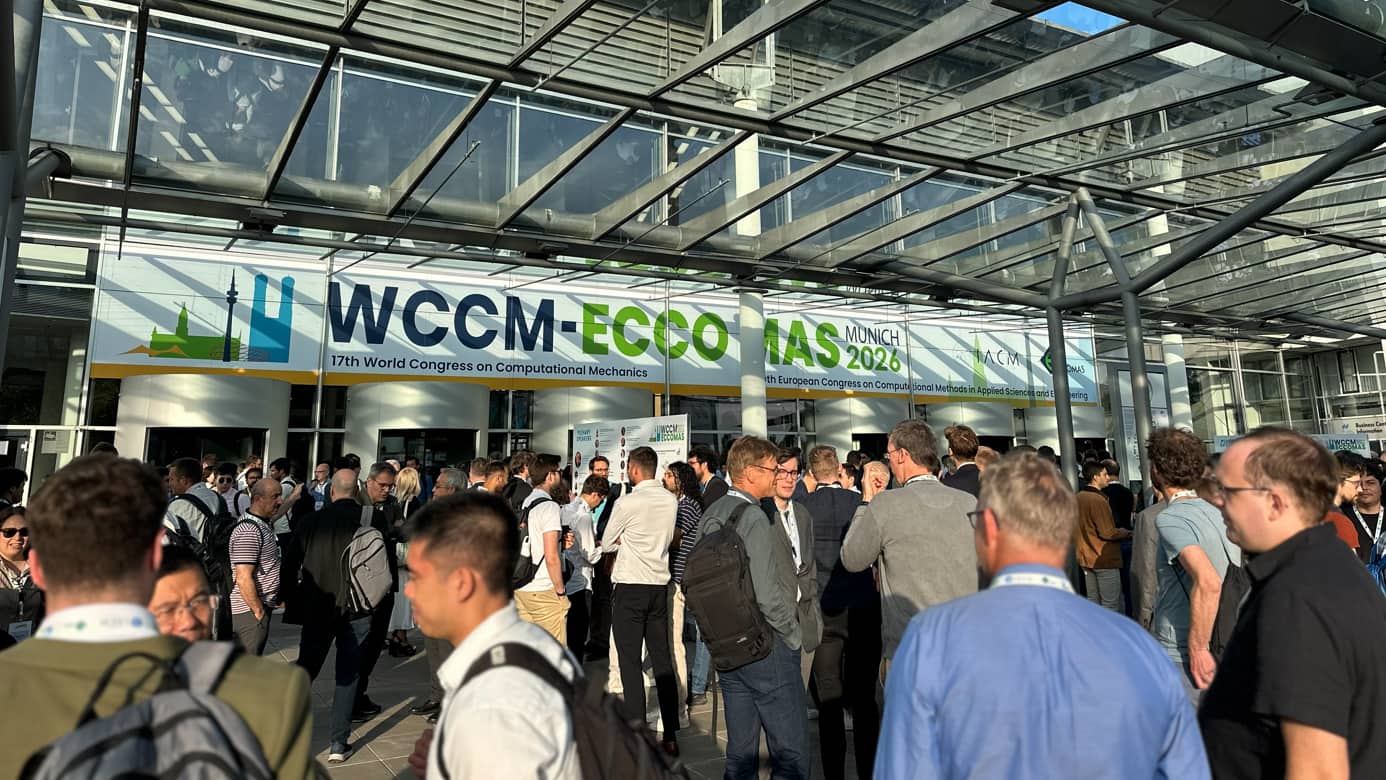
The joint WCCM–ECCOMAS 2026 Congress, one of the largest international events ever organised in the field of computational mechanics, gathered more than 5,000 researchers, professionals, and industry representatives from 65 countries in Munich, Germany, from 19 to 24 July.
The event combined the 17th World Congress on Computational Mechanics and the 10th European Congress on Computational Methods in Applied Sciences and Engineering, creating a major international forum for sharing the latest advances in computational science, mechanics and engineering.
Over six days, the congress programme featured more than 4,600 oral presentations, including 155 keynote lectures, as well as an opening plenary lecture, 24 plenary lectures, 344 minisymposia and 18 special technological sessions.
The making of WCCM–ECCOMAS 2026
Organised jointly by the International Association for Computational Mechanics (IACM) and the European Community on Computational Methods in Applied Sciences (ECCOMAS), WCCM–ECCOMAS 2026 was the result of extensive preparation and close coordination between the scientific committees, the organising team, the venues and the Conference Secretariat.
CIMNE led the Conference Secretariat and coordinated the planning and delivery of the event, from participant registration, abstract and programme management, and communications to logistics, technical requirements, and on-site support.
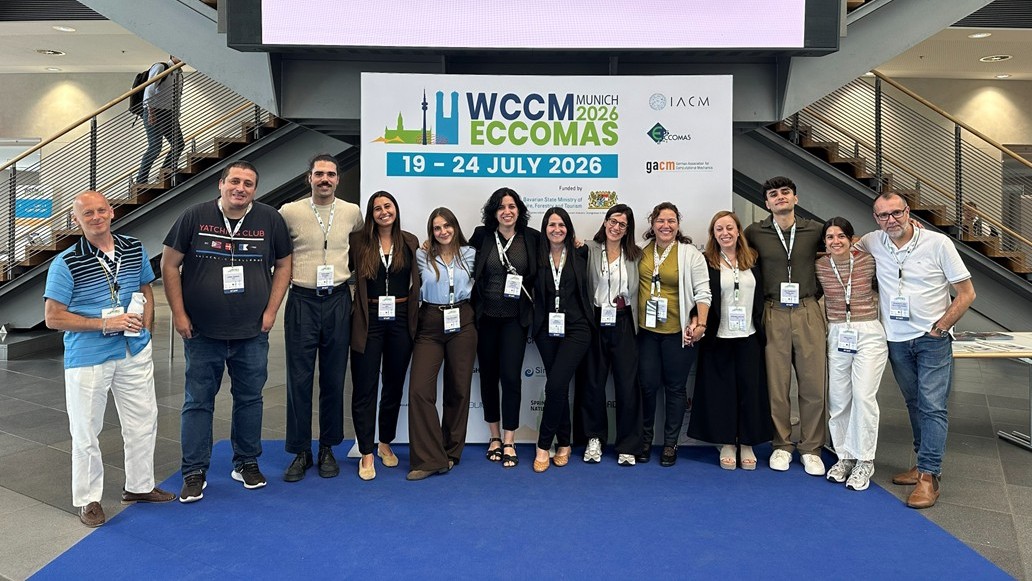
Conference Secretariat
The CIMNE Congress Bureau specialises in the international management of conferences, events and scientific associations, adapting each project to its local context. For nearly 30 years, the team has successfully organised more than 250 national and international events, managing every phase of the process, from bid preparation and proposal development to on-site coordination and post-event activities.
CIMNE’s scientific contribution
A broad delegation of CIMNE researchers participated in the congress, presenting their work, contributing to technical sessions and chairing scientific discussions across several areas of computational mechanics and engineering.
Prof. Pedro Díez, from CIMNE’s Credible High-Fidelity and Data-Driven Models research cluster, presented the cluster’s work on generating physically plausible artificial data for projection-based reduced-order models: “Physically-based data augmentation for POD reduced basis projection: generating plausible artificial snapshots”.
Dr. Gabriel Barbat, from CIMNE’s Solid and Fluid Simulation for Industrial Processes research cluster, co-chaired the session Efficient Modelling of Building Materials: Constitutive Laws and Multiphysics Applications Across Scales, devoted to computational approaches for analysing the behaviour of construction materials at different scales. He also showcased the cluster’s research through “Adaptive Formulation Refinement for the Mesh Objective Numerical Analysis of Localized Structural Failure”.
Dr. Juan Carlos Cante, from CIMNE’s Mechanics of Advanced Materials and Metamaterials research cluster, chaired sessions devoted to advanced materials, multiscale modelling and computational approaches to metamaterial design. He also outlined advances in shock-absorbing hyperelastic metamaterials through the study “Shock-Absorbing Hyper-Elastic Metamaterials: Recent Findings from Multiscale Modelling”.
Prof. Sergio Idelsohn, CIMNE Senior Distinguished Researcher, also played an active role in the scientific programme. He chaired several sessions of the minisymposium “Particle-based Methods: Advances and Applications in DEM, PFEM, SPH, MPM, MPS and Others” and presented the contribution “Simulation of Fluids Containing Small Immiscible Particles”. The minisymposium addressed theoretical and applied developments in particle-based computational methods for solid and fluid mechanics, fluid–structure interaction and related engineering challenges.
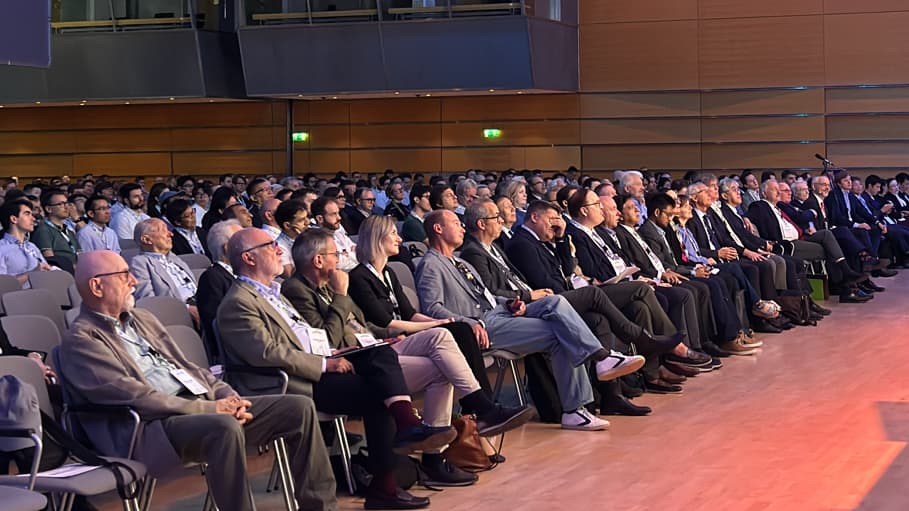
Building an international community
Beyond its extensive scientific programme, WCCM–ECCOMAS 2026 provided a wide range of opportunities for participants to meet and engage beyond the lecture rooms. Career lunches, activities, receptions and the Congress Dinner and Party encouraged exchanges between researchers from different countries, institutions, disciplines and career stages, helping to forge new professional connections and strengthen existing collaborations.
The event showcased the global reach of computational mechanics and CIMNE’s commitment to advancing the field through scientific excellence, international collaboration and the organisation of major research events.