Research

Computational engineering to tackle global challenges.

Cimne menu projects

Discover our latest research projects

Innovation

Delivering tangible solutions for the benefit of all.

Cimne menu nuclear

See how advanced simulation enhances nuclear safety

Community

A thriving network of global innovators, thinkers, and life-long learners in numerical methods.

Cimne menu unesco

Learn how the UNESCO Chair in Numerical Methods spearheads frontier innovation in the Global South

About

We are a pioneering research and innovation centre in computational engineering, founded in 1987.

Cimne menu people

People at CIMNE: Meet the talent that makes it possible.

See how advanced simulation enhances nuclear safety

Learn how the UNESCO Chair in Numerical Methods spearheads frontier innovation in the Global South

News

Back

CIMNE Scholar increased its citations in a 12% last year

Jan 19, 2022

CIMNE has registered 8.136 citations in Google Scholar in 2021. This figure represents a 12 percent more than in 2020, a higher increase compared to the 2019/2020 period, in which publications grew by 4,8%.

As of January 19, 2022, the account accumulates 93,615 total citations, with an h-index of 142 and an i10-index of 1.157.

Google Scholar January

Top-three of the most cited papers of the CIMNE Scholar account are, one more year, the following ones:

A plastic-damage model for concrete
J Lubliner, J Oliver, S Oller, E Oñate
International Journal of solids and structures 25 (3), 299-326, 1989.

3.798 (+ 630 citations in 2021)


A constitutive model for partially saturated soils
EE Alonso, A Gens, A Josa
Géotechnique 40 (3), 405-430, 1990.

3.176 (+241 citations in 2021)


A finite point method in computational mechanics. Applications to convective transport and fluid flow
E Oñate, S Idelsohn, OC Zienkiewicz, RL Taylor
International journal for numerical methods in engineering 39 (22), 3839-3866, 1990

1.089 (+71 citations in 2021)

Related News

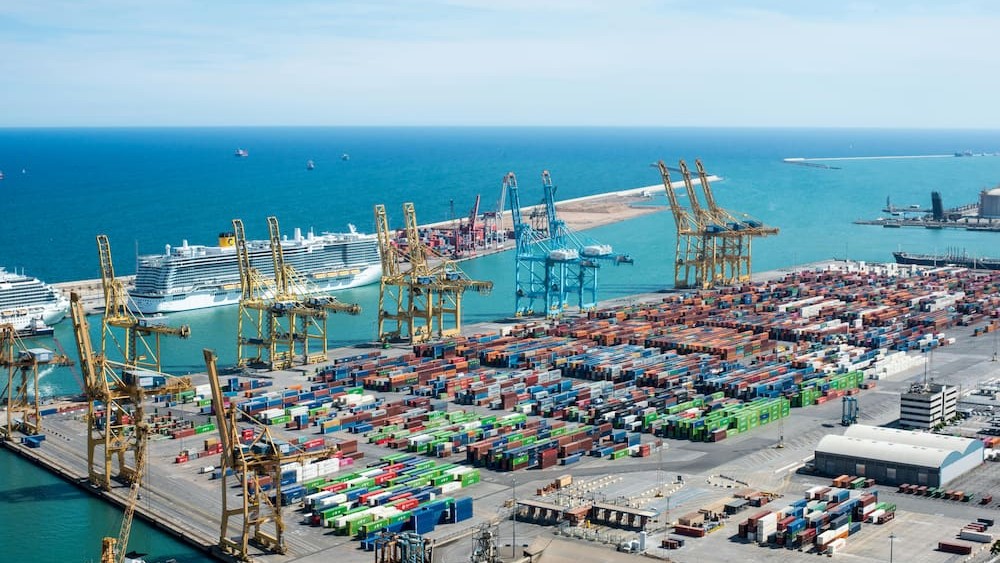
New study helps ports identify strategic uses for digital twins

New study helps ports identify strategic uses for digital twins

Digitalisation is reshaping the maritime sector, and ports are increasingly adopting advanced technologies such as artificial intelligence, IoT, and data-driven tools to improve efficiency, safety, and sustainability. In this context, digital twins are emerging as a...

Tags

Share: