

See how advanced simulation enhances nuclear safety

Learn how the UNESCO Chair in Numerical Methods spearheads frontier innovation in the Global South

News

Back

“Evolution of Demand Models: A glance at agent and activity-based models”

Apr 21, 2022

A new course on Demand Modeling

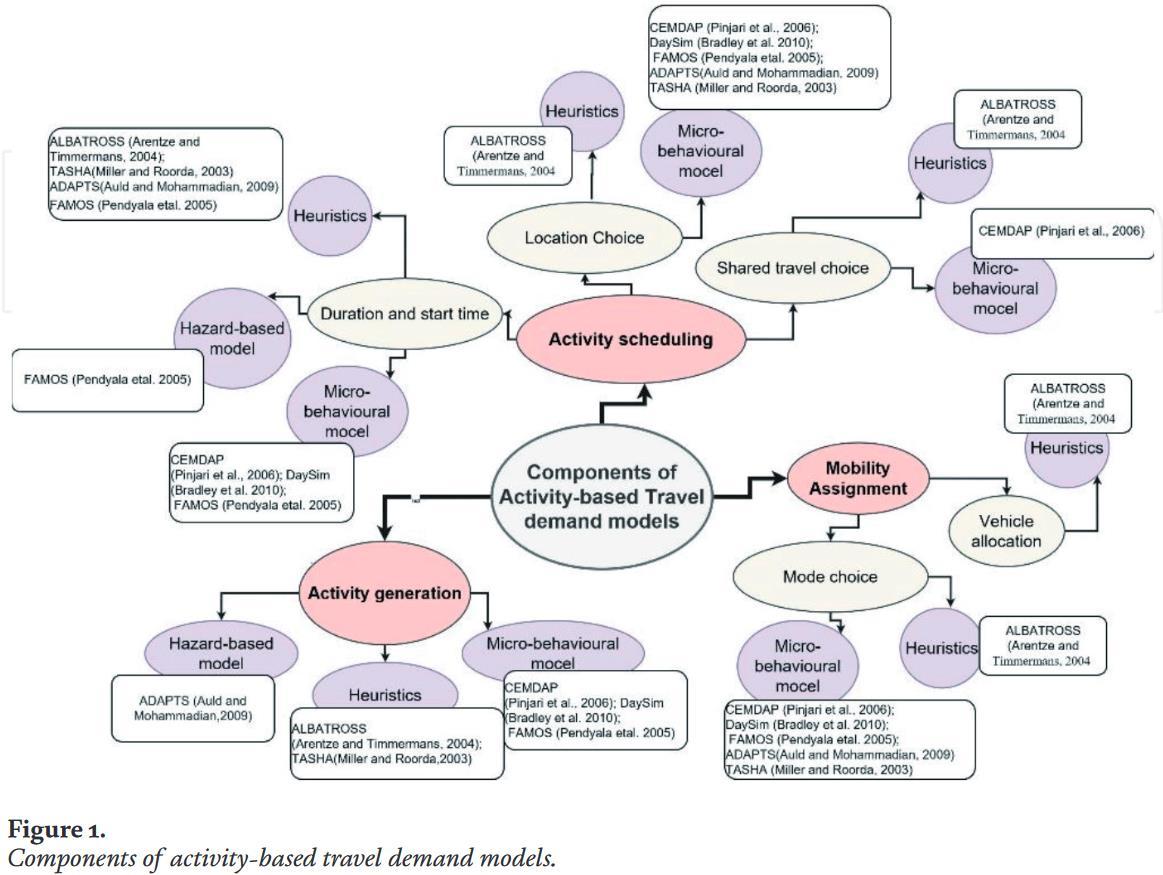
Traditional transport demand models; 4 stage models, have evolved from trip-based to tour-based to activity-based models. Activity-based models assume that a person’s need to travel is based on what activities they are involved in. The key difference in these models is that they don’t look at trips at an aggregate level, but rather at an individual level, taking into account all the trips and activities of the day based on a time sequence. 

These models therefore capture the heterogeneity of individuals, which makes them a useful tool in being able to evaluate more complex transport policies. This greater level of separation provides a more sensitive model  in order to assess, for example, more complex pricing policies which could vary according to time of day or socioeconomic characteristics of the population. The demand modeling session on 20th April will be about activity-based and agent-based models. The theory will be discussed, along with the potential advantages over traditional models and some real case studies will be presented. 
 

Genís Majoral Oller

MEng in Civil Engineering

Researcher in Transport Economics 

https://www.camins.cat/events/curs-online-modelitzacio-de-la-mobilitat-2022
Related News

Unify, analyse, and optimise: MindOpera already gathers data from more than 11.000 public  facilities
Unify, analyse, and optimise: MindOpera already gathers data from more than 11.000 public facilities

MindOpera is a comprehensive facilities information management system that enables public administrations, hospitals, universities and building managers to unify, analyse and optimise all energy and maintenance data in a single environment. This innovative tool,...

Complex orography, ageing infrastructure and lack of capacity: CIMNE experts warn of the fragility of commuter rail network in Catalonia

On Tuesday, 27 January 2026, in Gelida, Catalonia, a commuter train collided with a retaining wall that is believed to have come loose due to heavy rain. The accident resulted in one fatality, a trainee driver, and 37 people were injured. As a result of the incident,...

CIMNE and Singular Aircraft sign letter of intent to strengthen collaboration in aeronautical R&D

The International Centre for Numerical Methods in Engineering (CIMNE) and Singular Aircraft have signed a letter of intent framing strategic collaboration in research, development and innovation in the aeronautical field. The document, signed on Tuesday, aims to...

Tags