




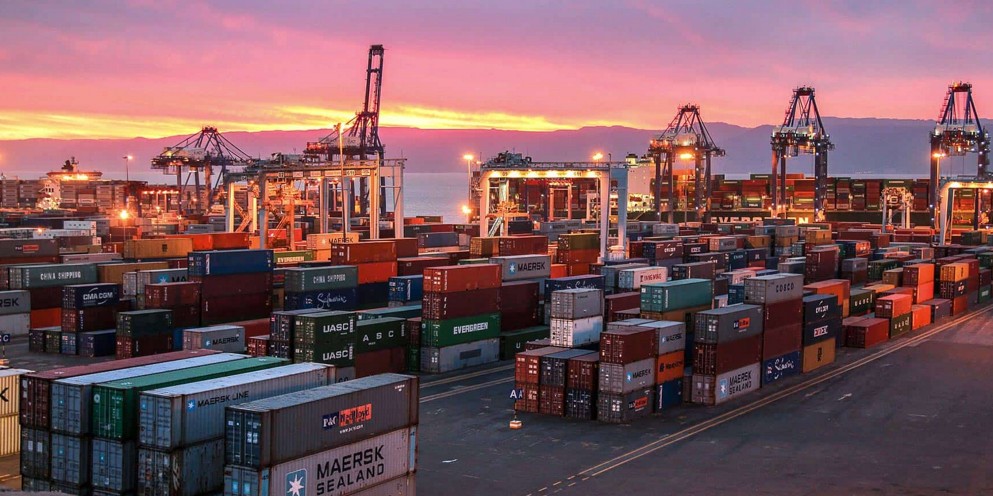
In 1966, the first container liner service from the US to the Dutch city of Rotterdam started and with it we witnessed the birth of international container shipping. The ensuing success of containerization not only changed the face of shipping, but also revolutionized world trade. Loaded and unloaded in a few hours, a container ship cuts labor costs, greatly reduces shipping times between ports and improves handling minimizing cargo damage.
So ports quickly became the interface between sea and land transport systems. Those same ports are now being transitioned to customer-oriented logistics hubs. Since the beginning of the 21st century, the focus for port authorities has been shifted to facilitating intermodal services rather than solely maritime connectivity.
In fact the evolution of logistics and technology has forced port authorities to take on a whole new role altogether, acting as cluster managers of complex hubs with multiple stakeholders. In short, these hubs have become dynamic port business ecosystems with multiple dimensions: internal clients, external clients and society, operations and management, financial capacity amongst others.
There are indeed other trending topics in the port arena starting with e-commerce, digitalization, automation that we expect to be intensified in the future. Let’s remember that strategic planning is not about ‘‘guessing the future’’ but rather anticipating a limited number of future scenarios and making the decisions that best suit, in this case, the port community.
In his recent research paper published in the Transportation Research Record and financed by the Port of Barcelona, CENIT´s Javier Garrido explores the emerging trends that will define the future role of ports. Garrido explains: “the idea was to pick out the most relevant trends affecting the port of the future and in fact essentially conceptualize a port vision for the year 2040. An ambitious task made simple with the input of more than one hundred experts from the maritime sector. We ran focus groups with the key port stakeholders to identify future trends that will have an impact on the maritime sector and port business including the following areas:
- containers
- ro-ro and short sea shipping (SSS)
- liquid and solid bulks
- maritime and context trends
- cruise industry
Check out the topline results presented on a scale from 1 being low impact to 6 being high impact.”

Full article available: Emerging Trends Defining the Future Role of Ports: Application of the Delphi Method (trb.org)
Javier Garrido is a Transport Economics Researcher and PhD Candidate at the Port of Barcelona