
ABSTRACT
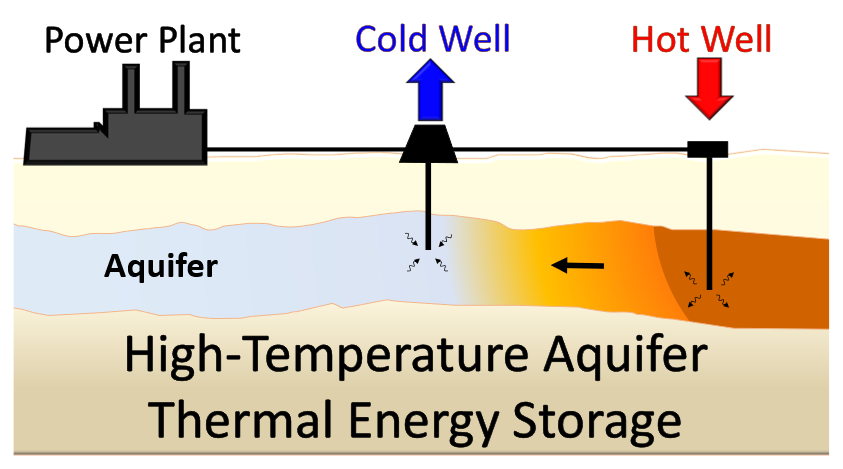
High-Temperature Aquifer Thermal Energy Storage (HT-ATES) is a geothermal technology that enables the storage of energy from low-carbon heat sources, allowing its use despite fluctuations in energy supply and demand. This technology involves the injection of hot water into aquifers, triggering a series of coupled thermo-hydro-mechanical-chemical (THMC) processes.
This CIMNE Coffee Talk focuses on understanding the THMC processes and impacts involved in HT-ATES systems through the development of analytical solutions, dimensional analysis, and numerical modelling. The proposed methods provide new insights into the coupled THMC processes governing HT-ATES systems, enabling the identification of the dominant mechanisms controlling heat transport, geochemical reactions, and ground deformation. They also offer efficient tools for assessing system performance and long-term behaviour with significantly reduced computational cost.
SPEAKER
 Dr Rubén Vidal Montes holds a degree in Geological Engineering from the University of Salamanca (USAL), an MSc in Geological and Mining Engineering from the Polytechnic University of Catalonia (UPC), and a PhD in Geotechnical Engineering from UPC. His research focuses on analytical solutions, dimensional analysis and numerical modelling of coupled thermo-hydro-mechanical-chemical (THMC) processes related to geo-energy and geo-engineering applications. He has recently received the Spanish Society for Rock Mechanics Award for the best research contribution in rock mechanics, granted to young researchers.