
Jakarta took a step closer in its journey toward a more sustainable, breathable future in April, as Sergi Sauri and Tomas Henriquez from CIMNE’s Innovation Unit in Transport (CENIT) led a validation workshop focused on shaping the city’s future Integrated Low Emissions Zones (Kawasan Rendah Emisi Terpadu – KRE-T). Hosted in the local language, Bahasa Indonesia, the workshop was a milestone in the development of Jakarta’s KRE-T pilot project, part of the Breathe Cities Programme supported by C40 Cities.
Understanding Jakarta’s Urban Complexities
The purpose of this workshop was to validate CIMNE experts’ key findings from their preliminary study, with participation from Jakarta government representatives from multiple departments, along with local NGOs and local stakeholders. Their insights were invaluable in validating the project’s key findings and tailoring the approach to the real-world complexities of Jakarta’s urban fabric.
«The KRE-T project is unique in how it chooses to address not just the transportation sector, as has become customary, but also other major polluting sectors in tandem, while aiming to increase urban resilience and livability through improved equity and increased green and blue spaces within the urban fabric», Mr Henriquez said.
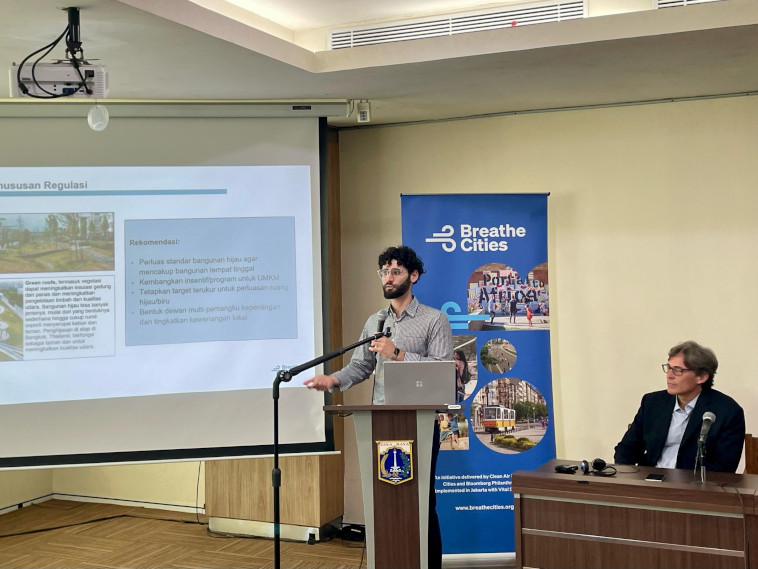
Tomas Henriquez during his intervention at the Jakarta workshop on Low Emission Zones.
Objectives for the Low Emission Zones
This project aims to identify, test, and scale integrated low emission zones across the city. It focuses on three major policy objectives:
- Improving air quality and congestion in designated areas
- Reducing emissions, particularly from the transportation, building, energy, and waste sectors,
- Equitably improving quality of life and increasing access to green and blue areas.
From Academic Research to Local Needs
This workshop builds on several months of groundwork, including an in-depth feasibility assessment and regulatory analysis, as well as the creation of a criteria framework to identify high-potential areas for pilot implementation. The framework takes into account critical elements such as mobility, land use, urban equity, infrastructure, and the built environment, evaluated through a multi-dimensional lens that balances environmental goals with social equity and urban livability.
«The validation workshop in Jakarta enabled our team to marry the technical analysis and academic research of the proposed KRE-T with the real needs and challenges of the citizenry and leadership of Jakarta», explained Tomas Henriquez. «This workshop and our direct collaboration with teams on the ground will inevitably increase the project’s potential for long-term success and we could not feel prouder to play a part in this next chapter of Jakarta’s future».
The event was marked by active participation from all stakeholders, reflecting a clear, shared commitment to advancing the project and supporting Jakarta’s transition toward more sustainable urban environments. Using gamification, the CIMNE experts conducted an engaging series of activities that emphasized not validation but also co-creation with those most familiar with the opportunities and challenges of Jakarta. The workshop also functioned as a space for meaningful collaboration, bringing together international expertise and local knowledge to shape practical, context-sensitive solutions.
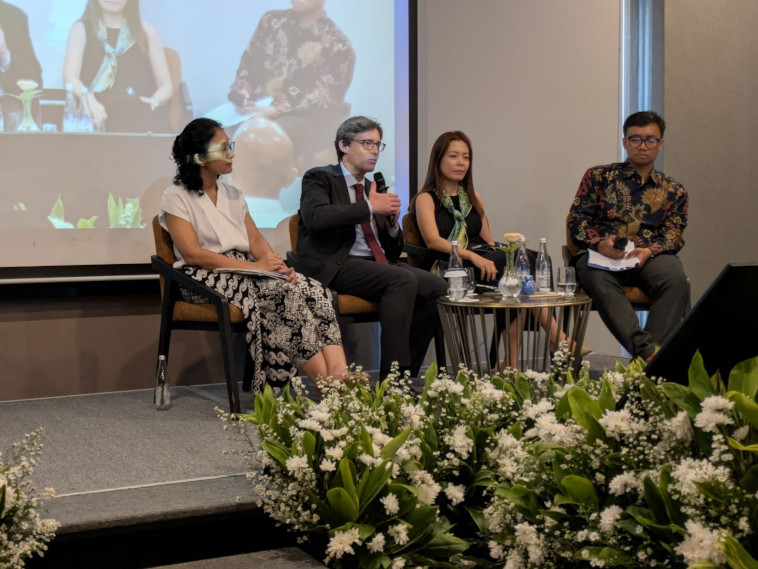
Sergi Saurí and Jakarta government representatives at the workshop on Low Emission Zones.
Next step: a pilot implementation plan
With the validation workshop complete, the project team is moving into the final phase: refining guidelines and shaping a pilot implementation plan for the first KRE-T zones in Jakarta.
Tomas Henriquez shared his hope that Jakarta’s efforts will serve as a model: «We hope this project will serve as an inspiration for other cities struggling with similar livability and air quality issues to implement their own integrated low emission zones».
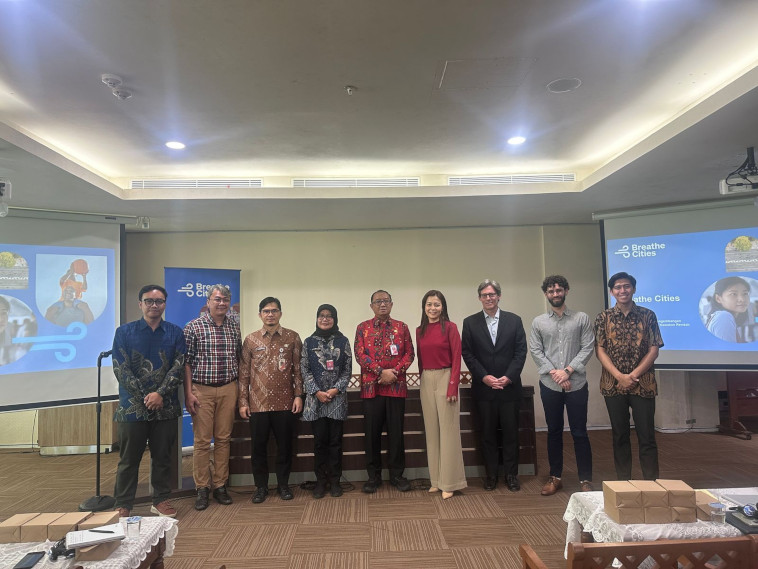
CIMNE experts and Jakarta government representatives at the workshop on Low Emission Zones