It all began 25 years ago with two young engineers, fresh out of university, and an idea. Today, we are a leading European group working every day to provide digital tools that support climate action in our cities, help public buildings operate more efficiently, and promote new models of decentralised energy generation and consumption.
Decarbonising buildings and managing them efficiently was our starting point. If we wanted to protect the planet and safeguard the future of generations to come, that was where we had to begin: understanding how we consume energy, where it is wasted and how to manage it better. This is how BEE Group (Building, Energy and Environment Group) was born, becoming CIMNE’s first technology transfer unit (now an innovation unit).
A small group. With limited resources. But with an enormous ambition: to become a leader in applied research into energy efficiency, decarbonisation and climate action, with people as the driving force behind change and at the heart of everything we do.
Some anniversaries catch you by surprise. This is one of them. Twenty-five years. Even saying it out loud, I still find it hard to believe.
Open Science since day one
There is one decision that shaped the way we work from the very beginning, and one I champion whenever I can: knowledge must be shared and made accessible to society.
Climate change affects us all. It recognises no borders, institutions or patents. If a research group in another country can reuse something we have developed and save itself two years of work, the planet gains two years. It is as simple as that.
This belief led to the development of our first energy management software for public buildings: the SIE platform.
Think of it this way: for the first time, a local council could see at a glance how much energy its school, library or sports centre was consuming. And take action. It may sound like a small thing. It isn’t. I have always said it: you cannot improve what you do not measure.
That first piece of software laid the foundations for a transformation in energy management across local government in Spain.
Since then, we have never stopped sharing. Today, we have 57 open GitHub repositories containing code, methodologies and models that any researcher, local council or company anywhere in the world can use, improve and adapt.
For us, sharing knowledge is also a way of moving forwards and making a tangible impact on society.
From tools to real-world impact: Inergy
But a tool is only useful if someone actually uses it. And this brings me to one of the things I am most proud of: we have never been content to leave our work on paper.
We created SIE in 2004, spent eight years nurturing its roll-out across Catalonia and, in 2012, took the next step by founding Inergy, a spin-off that brought our energy management software into the everyday operations of public administrations and businesses throughout Spain.
The figures? They speak for themselves:
- More than 400 local councils receiving energy services.
- Over 35,000 electricity supply contracts.
- 1,500 GWh of energy consumption under management.
- More than 10,000 public buildings monitored in real time.
Behind every one of these figures is alocal authority officer spotting an unexpectedly high energy bill, a school adjusting its heating, or a sports centre putting an end to energy waste that had previously gone unnoticed overnight.
That is what we always wanted: to bring science into everyday life.
In 2017, we broadened our focus to the large-scale processing of residential customers’ energy data and business intelligence for electricity retailers. This led to the creation of beedata, our second start-up, which successfully brought big data services to the electricity retail sector. It managed more than 350,000 contracts during its five years of operation before being acquired by INERGY. A success story demonstrating how to build a company and a business model capable of thriving beyond European funding.
Open science and public funding transformed into a business. A business delivering real-world impact. That was the dream.
Today: data, artificial intelligence… and cleaner, more climate-resilient cities
From 2016 onwards, we made the leap into big data and machine learning. We began monitoring entire portfolios of buildings and developing models capable of detecting anomalies in energy consumption, generating forecasts and assessing energy flexibility in relation to energy markets.
In 2019, we developed ENMA, an architecture capable of processing vast amounts of energy data alongside heterogeneous operational and maintenance data. Then came smart grids, working alongside Àlvaro Luna and UPC’s Department of Electrical Engineering; energy communities; and agreements with Infraestructures.cat and the Catalan Energy Institute (ICAEN).
One after another. Never stopping.
In 2021, through the BIGG and EN-TRACK projects, we embarked on our third successful initiative to turn European funding into sustainable technology and business activity. This brought us face to face with the reality of Catalonia’s public administration: an abundance of data, but also the challenge of finding ways to use them and unlock their full potential.
We began collaborating with Infraestructures.cat (iCAT) and the Catalan Energy Institute (ICAEN) to develop and operate the Government of Catalonia’s Public Buildings Data Orchestrator and the Energy Information and Monitoring System (SIME). These two leading platforms support the efficient operation of the Catalan Government’s buildings, photovoltaic installations and electric mobility infrastructure, as well as its Public Buildings Energy Saving and Efficiency Plan.
In 2025, we went one step further with a climate vulnerability map of Barcelona. 67,000 buildings analysed, 44 indicators. A demonstration of how knowledge graphs and artificial intelligence (AI) can support climate action in cities on the scale of Barcelona.
And this year, 2026, we are unveiling BEE Mind: artificial intelligence supporting the decarbonisation and climate adaptation of large building portfolios, cities and regions such as Catalonia. For me, it represents the culmination of many years of work by the entire team.

What we are today: European leaders in digitalisation, energy transformation and citizen empowerment
Sometimes I look back at the figures and have to read them twice:
- 15 technology transfer processes involving companies.
- Barcelona’s digital twin for climate action.
- An architecture and semantic ontology capable of processing more than one million data points per day from 12,000 public buildings.
- The intelligence at the heart of Spain’s first energy community management platform.
- More than 100 scientific papers and six co-supervised PhD theses.
- Participation in over 60 European projects (more than 10 as coordinators).
- Collaboration with more than 70 research groups worldwide.
Not bad for two people who started with an idea, is it?
Local, multidisciplinary talent and a gender-aware approach
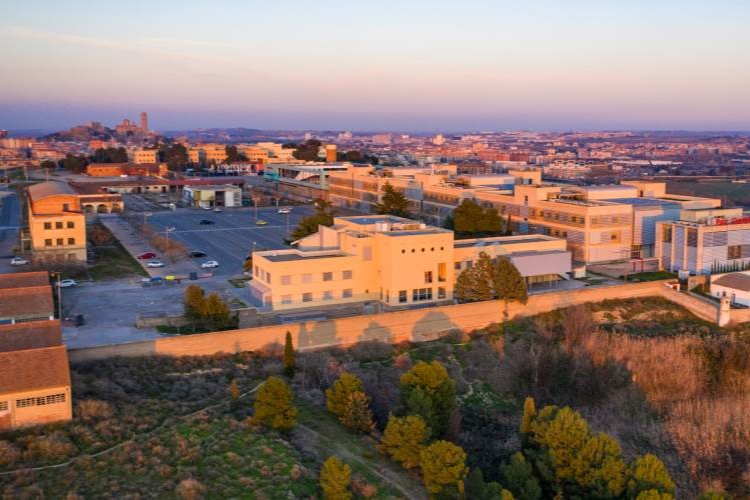
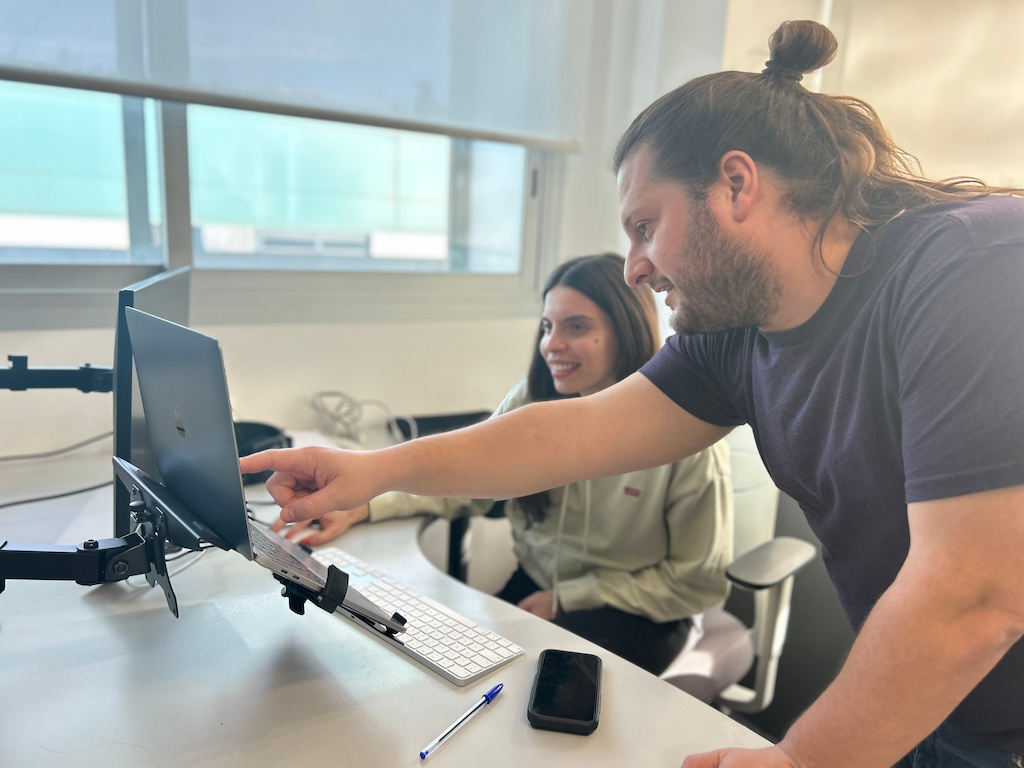
And finally, something that makes me — and all of us — particularly proud: having helped attract and retain young talent in the Lleida area and Vallès Occidental, so that young people from Lleida and Terrassa do not have to leave home after completing their engineering degrees.
And, of course, our strong commitment to recruiting people from around the world. BEE Group brings together people of six different nationalities.
One challenge remains: recruiting more women into a scientific and technical field still dominated by men. We have made a major effort in recent years and, although we have women who are recognised leaders in data engineering and in computer systems and models applied to energy efficiency, we still have more work to do to achieve genuine gender balance.
Dr. Jordi Cipriano
Director
BEE Group