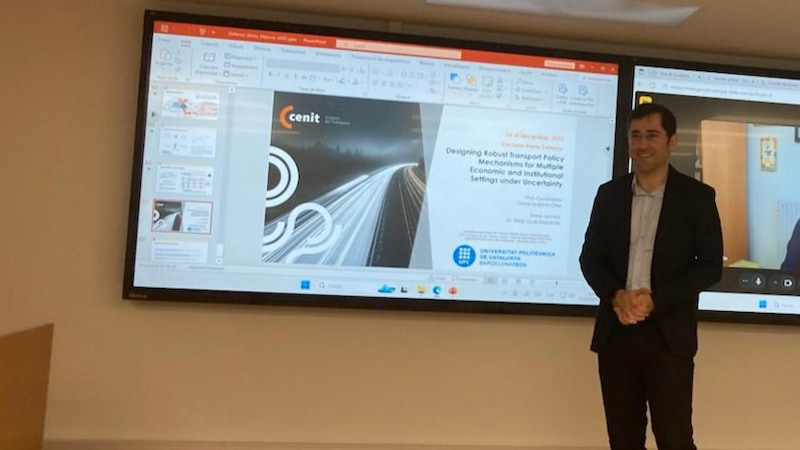
Genís Majoral, researcher in our Innovation Unit in Transport (CENIT), successfully defended his doctoral thesis on December 1 at UPC (Polytechnic University of Catalonia-BarcelonaTech). “Designing Robust Transport Policy Mechanisms for Multiple Economic and Institutional Settings under Uncertainty” proposes a more robust and systematic approach to transport policymaking, tackling one of the biggest challenges currently facing transport planners: making effective decisions in an increasingly complex environment marked by deep uncertainty, rapid technological change, and competing stakeholder demands.
Science for transport: a framework for more resilient and well-reasoned decisions
The new avenue proposed in the thesis shifts from research focused on individualised analysis to an overarching scope encompassing policymaking in transport. The approach to policy, from design to implementation, is undertaken in a fragmented way. Genís’ thesis addresses this gap by developing a framework that strengthens policymaking through systematic learning and analysis of why policies fail.
The work begins by mapping transport policy clusters through a combination of transport system characteristics and policy instruments. From there, it introduces a Transport Policy Failure Mechanism Framework, a diagnostic tool that pinpoints vulnerabilities before they undermine implementation.
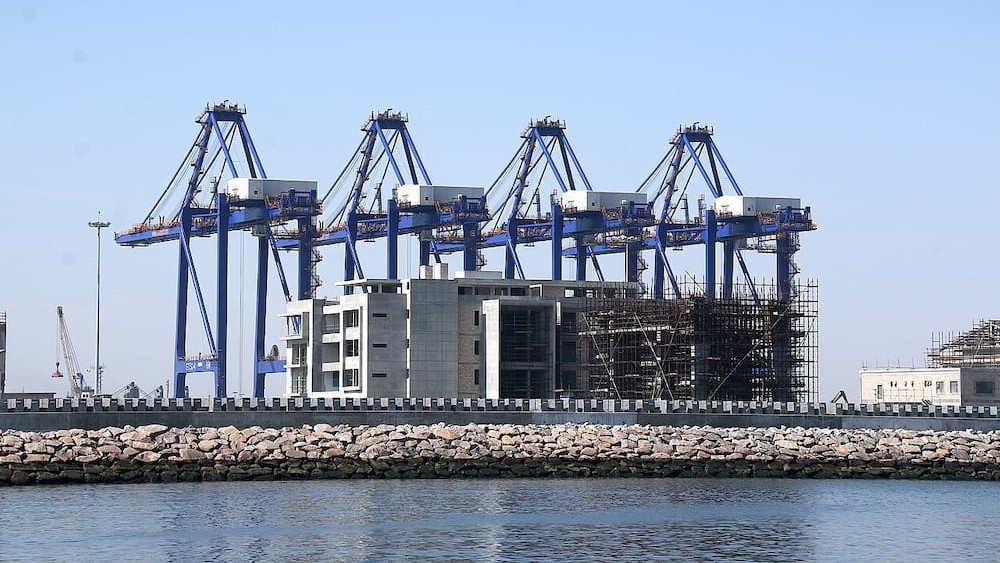
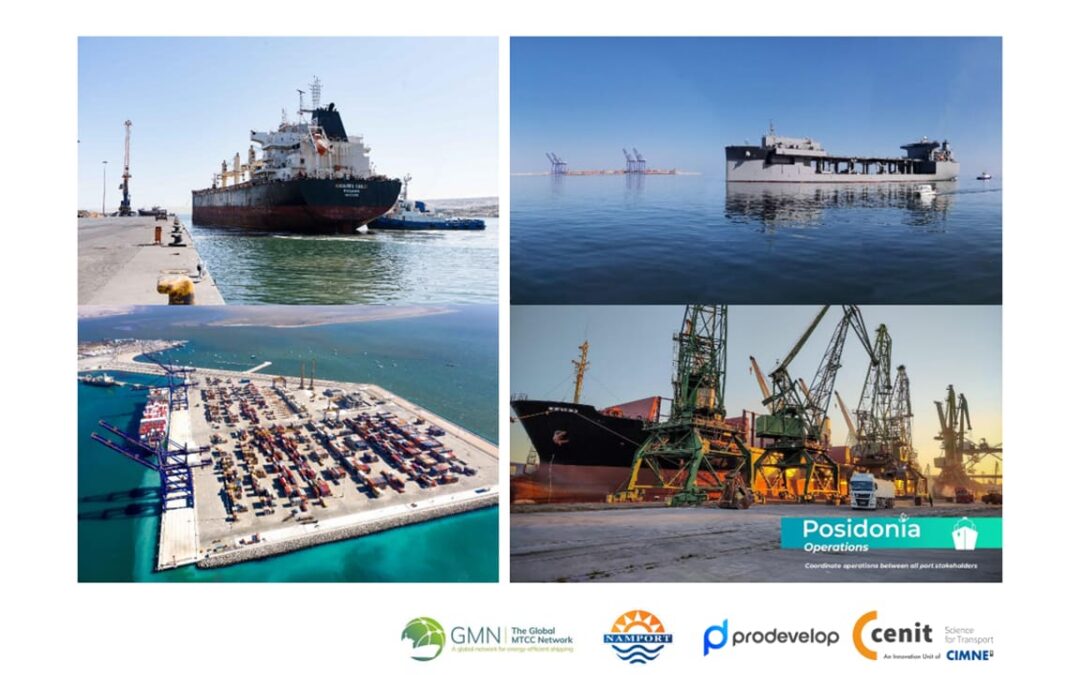
Additionally, four case studies—an e-commerce tax applied to consumers, automation of container terminals, Barcelona’s superblocks, and road freight decarbonization— provide thorough research on these topics and are used to test the framework developed. These findings lead to one of the thesis’ main contributions: a two-tiered set of policy design principles.

The Barcelona Superblocks case study helped to identify key failure patterns in existing transport policymaking.
By shifting the focus from reactive solutions to a structured policy design science, this thesis offers a foundation for more resilient and well-reasoned transport decisions. Its goal is to support governments, planners, and policymakers in building strategies that can withstand uncertainty and change.
Advancing sustainable mobility
Genís says, “more and more we are moving to policymaking in complex environments, in brownfield conditions, experimentation in living cities takes a long time. We need to shift the focus to be able to design our policies by learning lessons from multiple perspectives.”
CIMNE congratulates Genís on this important milestone and the contribution his research brings to the future of sustainable mobility policy.