
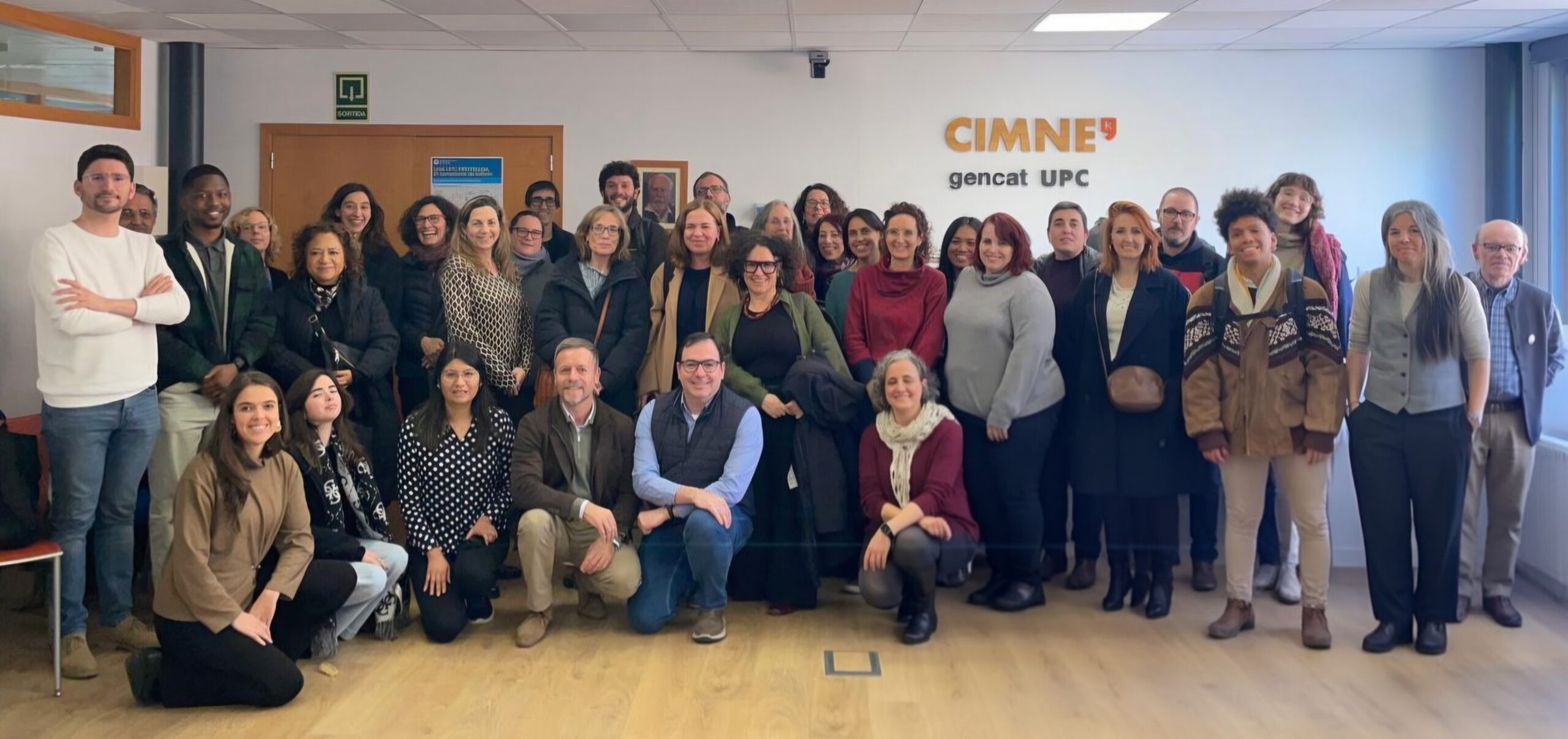
 The International Centre for Numerical Methods in Engineering (CIMNE) hosted, today, the first meeting of 2026 of the CERCA centres Impact Community, which took place in the “Olek C. Zienkiewicz” room at CIMNE’s headquarters in Barcelona.
The session, co-organised by CIMNE’s technology transfer team, brought together academic and research staff as well as research support members from various CERCA centres to address research impact strategies aimed at maximising their significance for society.
The CERCA Impact Community is a working group that brings together technology transfer specialists and researchers from the over forty public research centres affiliated with the Government of Catalonia to advance a global research impact strategy and strategies tailored to each institution.
The meeting, attended by CIMNE’s Director General, Prof. Javier Bonet, served to share best practice, harmonise evaluation frameworks and generate common tools to facilitate dialogue with public and private stakeholders, in line with the objective of strengthening Catalonia’s network of research centres.
A cross-sectoral meeting
The day began with institutional welcomes and an address by the CIMNE Director, Professor Javier Bonet, who presented the general framework for evaluating research impact in the United Kingdom via the Research Excellence Framework (REF) and highlighted its relevance as an international benchmark.
Next, Jean Grugel, a researcher at IBEI, offered a social sciences perspective on impact evaluation, emphasising the need to incorporate qualitative methodologies to better capture the effects of research on people and public policy.
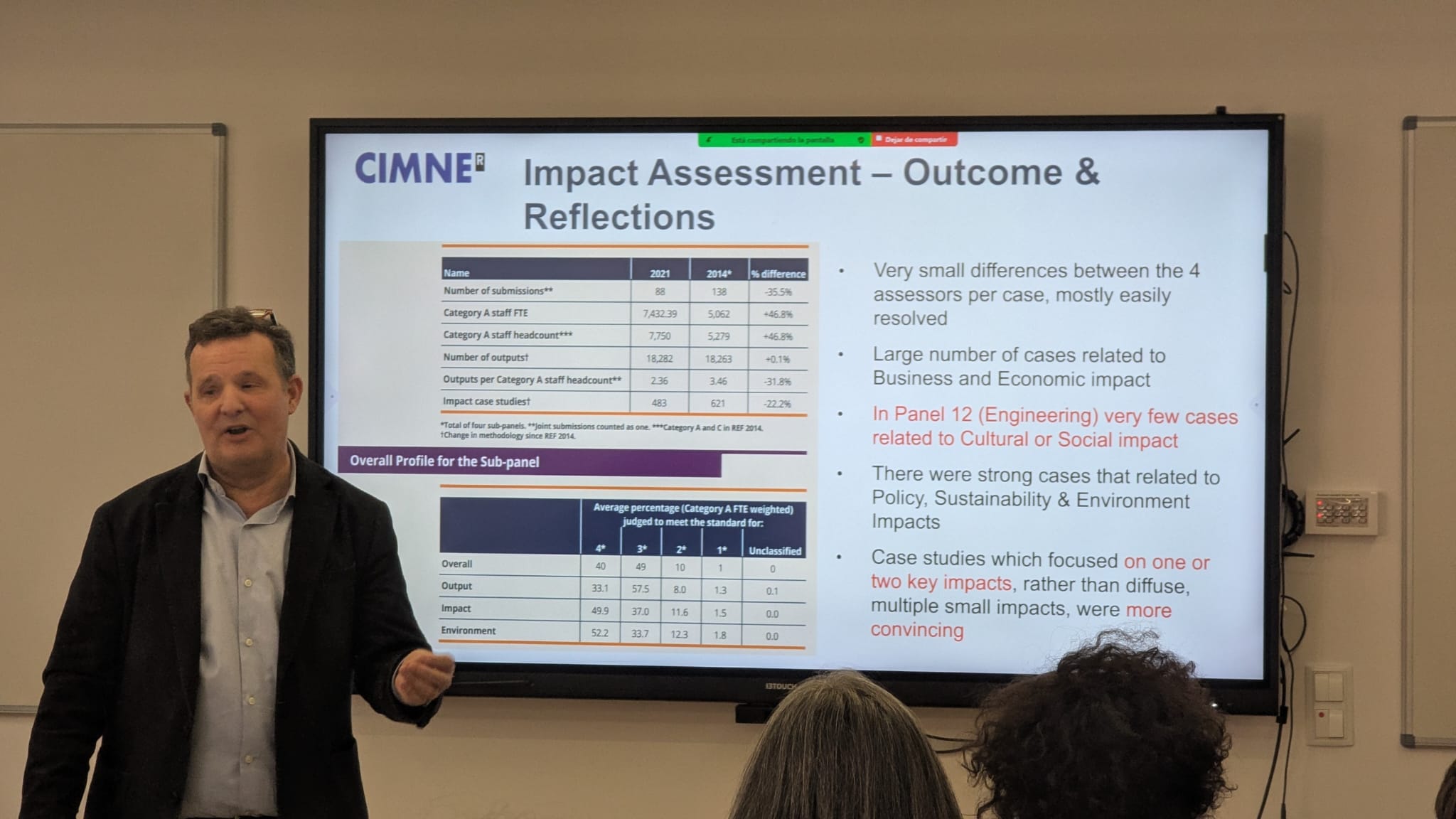
Prof. Bonet, during his address, today, at CIMNE’s headquarters in Barcelona.
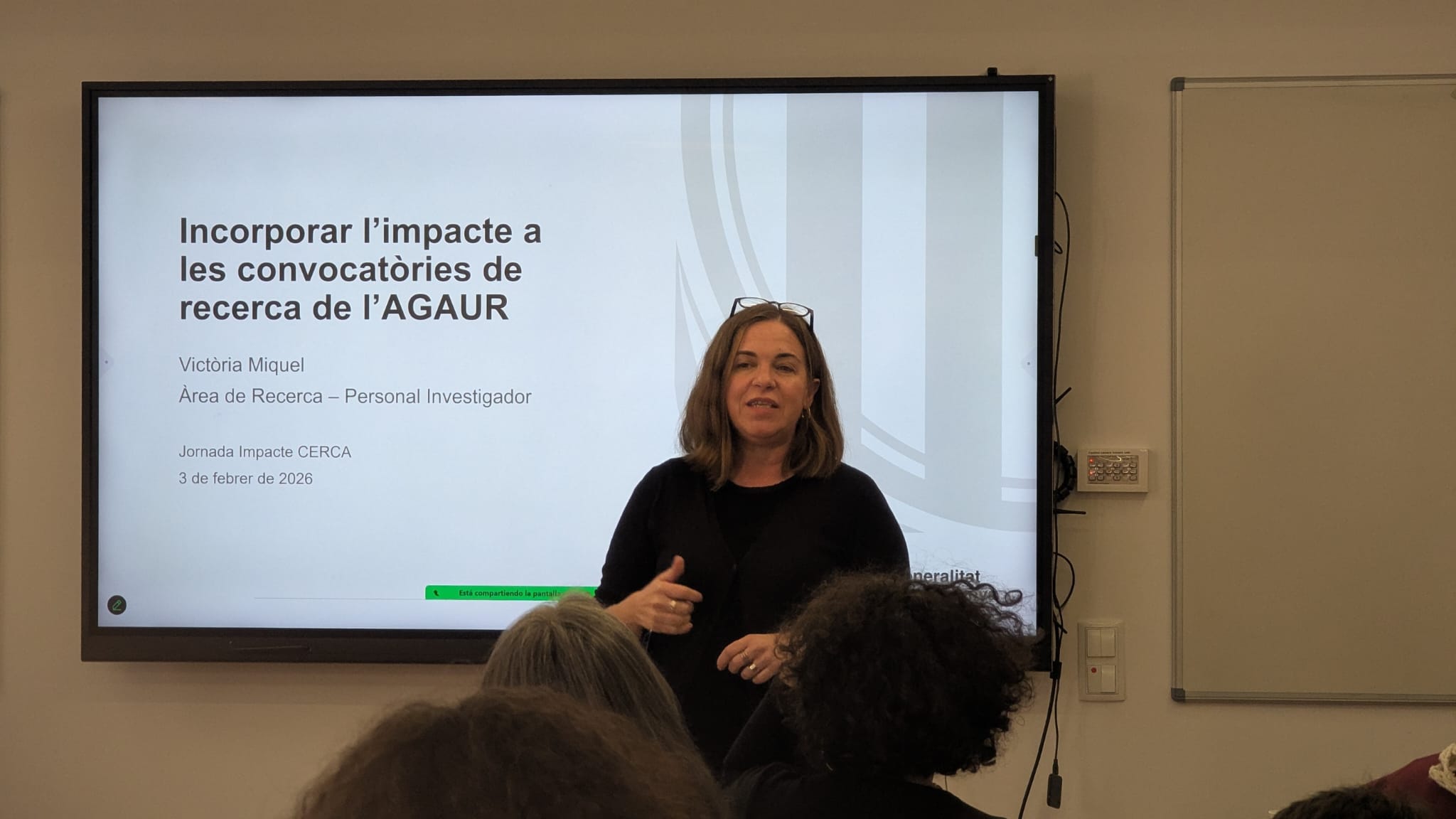
Victòria Miquel, Director of the Research Area at the Agency for Management of University and Research Grants of Catalonia (AGAUR), outlined how the body is incorporating impact into its research programmes and funding calls. Following this, Esther Vizcaíno, from the AQuAS Research Laboratory, explained how the agency has integrated impact into health research evaluation, citing recent experiences in outcome analysis and evidence-based decision-making.
 For her part, Rebeca Zapata, from the Directorate-General for Research (DREU), focused on the call for Grants for Projects with Knowledge Impact on Society, aimed at promoting projects with transferable results oriented towards the common good. In the final morning block, Núria Benítez, representing ICERCA, shared the results of a recent survey among CERCA centres on the state of impact and outlined the next steps for the Impact Community, including new training and coordination initiatives.
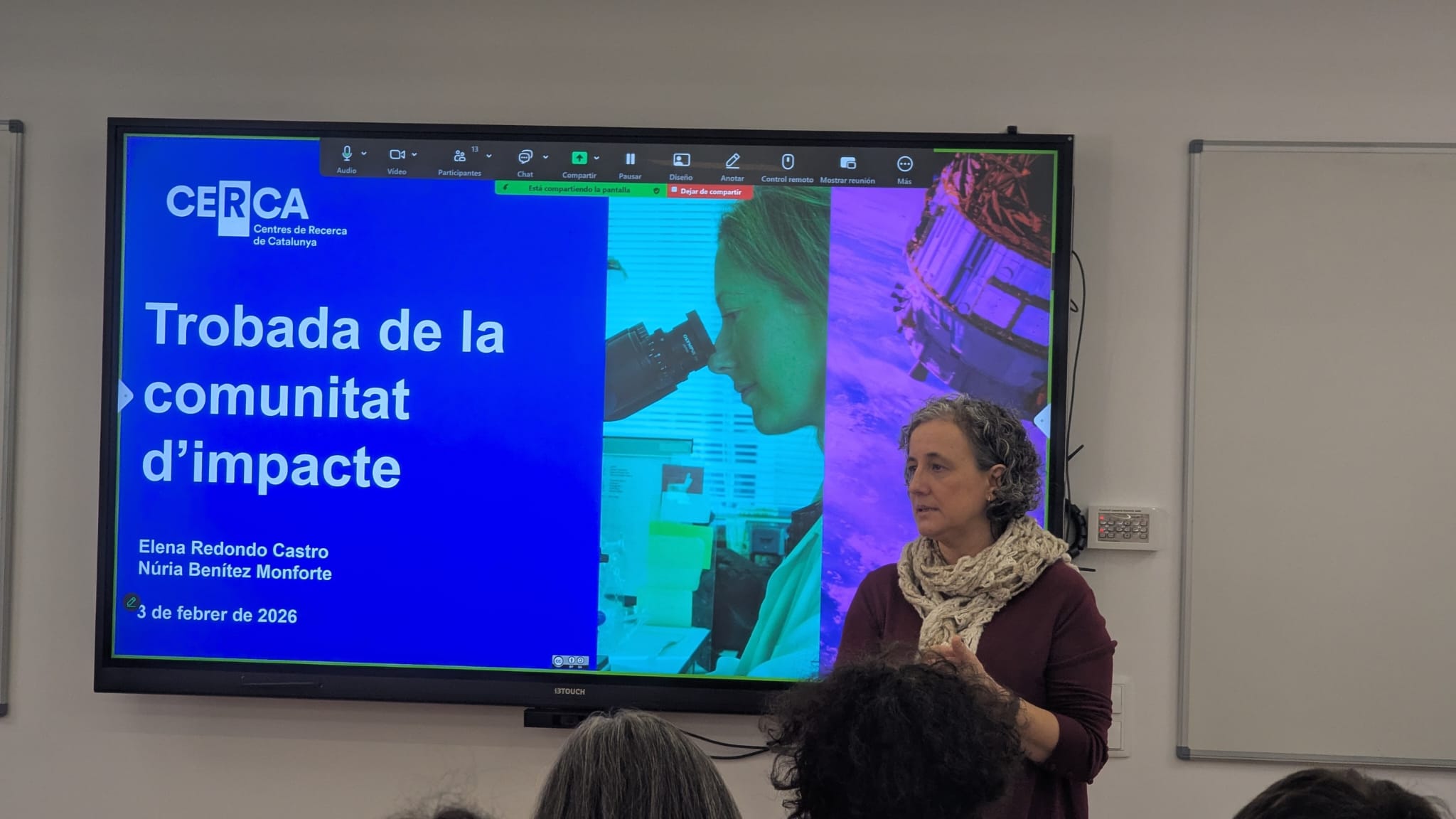
Núria Benítez spoke on behalf of the CERCA Institution.
Research impact at CIMNE
Within the framework of its Impact Strategy 2023-2028, CIMNE works on five main research areas: adaptation to climate change, mobility, cities and territory, energy and the environment, industrial processes, and health. The rollout of the plan, led by the technology transfer team, also considers cross-cutting axes such as valorisation and collaboration with other entities.
This strategy is based on generating advanced computational models to address complex challenges and on developing knowledge transfer pathways, including services, licences, and the creation of spin-offs, with the goal of ensuring that research into numerical methods has a measurable impact on engineering and sustainable development.
Meetings of the Impact Community are held periodically at various venues within the CERCA ecosystem, and CIMNE has been an active member since its inception.