
In recent days, several articles have been written about the possible causes of the blackout that hit almost the entire Iberian Peninsula on 28 April 2025, and the various strategies to prevent it from happening again. It seems that the nuclear lobby has found a main culprit —intermittent renewables— and a main saviour: extending the life of nuclear power plants.
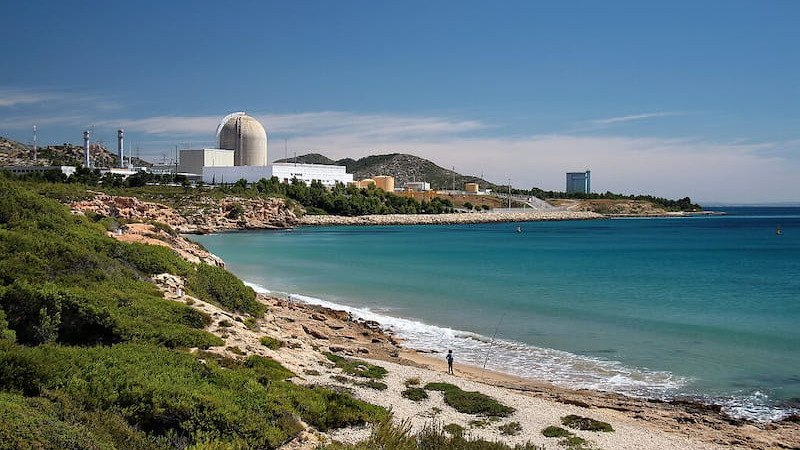
However, according to data provided by Red Eléctrica Española (REE, the Spanish electricity grid operator), nuclear plants were among the first to shut down and the last to recover (according to REE, they remained in safety shutdown until noon on 30 April). This is because these plants are primarily designed to provide stable baseload power and have safety protocols that require specific restart procedures after critical events, resulting in longer recovery times. As a result, nuclear technology is not capable of compensating for rapid and severe frequency variations such as those that occurred minutes before the blackout. Pointing to the continuity of nuclear power as a measure to deal with such crises is fallacious, opportunistic and self-serving.
Instead of returning to the centralised fossil or nuclear generation system of the 20th century, we should aim for greater decentralisation of both generation and distribution. Renewables offer a huge opportunity to bring generation closer to consumption, provided they are combined with storage and power stabilisation devices (such as grid-connected inverters in the case of photovoltaic systems).
This decentralisation can also be implemented at district or community level through the development of micro-grids (MGs), which contain autonomous clusters of resources connected by a medium- or low-voltage network. MGs are already being used, albeit sparingly, to optimise collective self-consumption and can contribute to providing aggregate flexibility for energy markets or ancillary services.

Darkened buildings in Barcelona at dusk on 28 April 2025. | Photo: Piotr Hojka, Wikimedia Commons
In the context of a massive deployment of interconnected renewable energy sources—which increase the variability of generation forecasts, reduce system inertia and make it difficult to maintain grid stability — MGs and clusters of smart buildings can play an important role in the moments before a blackout. They can help in mitigating the effects of the blackout itself and in accelerating grid recovery.
As argued in several studies [1,2], in the moments of instability before a blackout, if the main grid were connected to a large number of MGs with batteries, renewable generation systems (connected via grid-connected inverters), and buildings with fast and intelligent controls. These resources could be used in real time to correct frequency distortions. Furthermore, in the event of a blackout, the MGs could disconnect from the main grid and operate autonomously in island mode, speeding up the subsequent recovery of the grid.
The applied research developed by CIMNE's Building, Energy and Environment Innovation Unit (BEE Group) focuses on the development of intelligent management systems for buildings and district microgrids to increase their responsiveness and flexibility using artificial intelligence methods based on real-time data. With more than two decades of experience in developing solutions for energy efficiency in urban environments, adaptation to external climatic events and active demand management, the group is actively working on tools to anticipate, manage and mitigate disruptive events such as the one that occurred in late April.
These include massive processing systems and real-time data analysis, the application of artificial intelligence algorithms to forecast generation, consumption and anomalies, and the design of energy optimisation strategies for buildings, neighbourhoods and cities. These technologies, which are already being applied in various European and national projects, aim to increase the reliability of electricity supply, reduce the vulnerability of infrastructures and support the transition to a more sustainable and secure energy model.
At CIMNE, the BEE Group reaffirms its commitment to innovation in the service of smarter and more resilient energy management, convinced that technological preparedness is the key to meeting the challenges of the present and the future.
Jordi Cipriano
Director
BEE Group
[1] Danner, P., Volkova, A., & De Meer, H. (2024). Two-Step Blackout Mitigation by Flexibility-Enabled Microgrid Islanding. e-Energy '24: Proceedings of the 15th ACM International Conference on Future and Sustainable Energy Systems, 2024, Pages 596-605. ArXiv. https://doi.org/10.1145/3632775.3661986
[2] Okan Ciftci, Mahdi Mehrtash, Farnaz Safdarian, and Amin Kargarian. 2019. Chance-Constrained Microgrid Energy Management with Flexibility Constraints Provided by Battery Storage. In 2019 IEEE Texas Power and Energy Conference (TPEC). IEEE, College Station, TX, USA, 1–6. https://doi.org/10.1109/TPEC.2019.8662200