
Simon_sees, via Wikimedia Commons, CC BY 2.0: https://creativecommons.org/licenses/by/2.0/
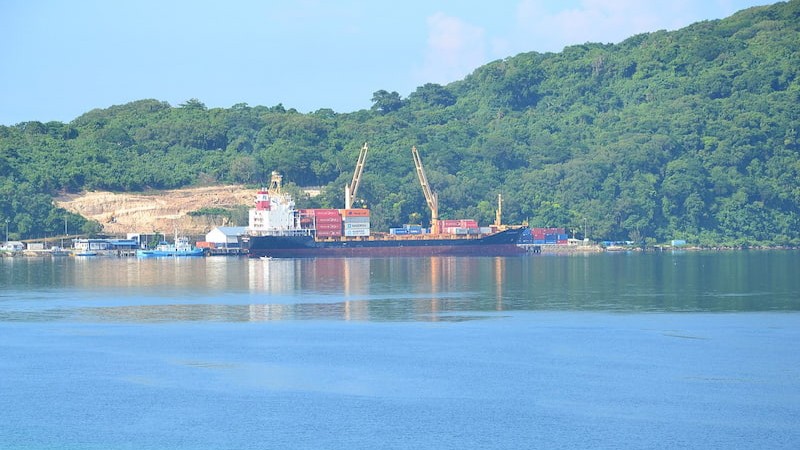
Maritime transport is a lifeline for Pacific Island countries, connecting communities, supporting trade, and enabling access to essential services. However, the sector is a significant and growing source of greenhouse gas emissions.
Strengthening how these emissions are measured and managed is a critical step toward decarbonisation. Within this context CENIT – Innovation Unit in Transport at CIMNE – is contributing to a new initiative led by the Global Green Growth Institute (GGGI) to support maritime decarbonisation in Fiji, Tonga, and Vanuatu.
Data-driven framework for long-term emissions tracking
CENIT’s researchers are leading a technical workstream dedicated to strengthening the data foundations required for effective maritime Monitoring, Reporting and Verification (MRV) systems. The work focuses on transforming fragmented and inconsistent information into reliable, standardised datasets that can support long-term emissions tracking.
To make this possible, the study will focus on identifying, validating and standardising vessel activity and fuel-use data, and compiling them into integrated national maritime databases. It will also develop quality assurance and quality control (QA/QC) protocols and support institutional capacity for sustained data management and reporting.
According to CENIT project manager Dr Genís Majoral, this project “addresses a critical gap between available maritime data and its effective use for climate policy, helping countries move from fragmented information toward tailored, robust MRV systems.”
This work is closely coordinated with national authorities and regional partners, ensuring alignment with international frameworks such as the IMO Data Collection System or IPCC’s Emission Transparency Framework, while remaining practical for local operating contexts.
Robust systems tailored to regional contexts
CENIT is working alongside the Micronesian Center for Sustainable Transport (MCST) and University College London, to support Pacific Island countries in strengthening maritime data systems.
This collaboration combines technical expertise and regional knowledge, helping ensure that MRV approaches are not only technically robust, but also well adapted to the operational realities of the Pacific Island states involved in the study.
Enabling future digital MRV systems
The datasets, protocols, and institutional processes developed by CENIT will directly support the next phase of the programme: the implementation of a MRV system and understand the potential for decarbonization strategies such as onshore power supply. Ensuring data completeness, consistency, and traceability at this stage is therefore essential.
By laying these technical and institutional foundations, our researchers are helping Pacific Island countries strengthen their capacity to monitor maritime emissions, support low-carbon planning, and advance a more sustainable and resilient maritime transport sector.