
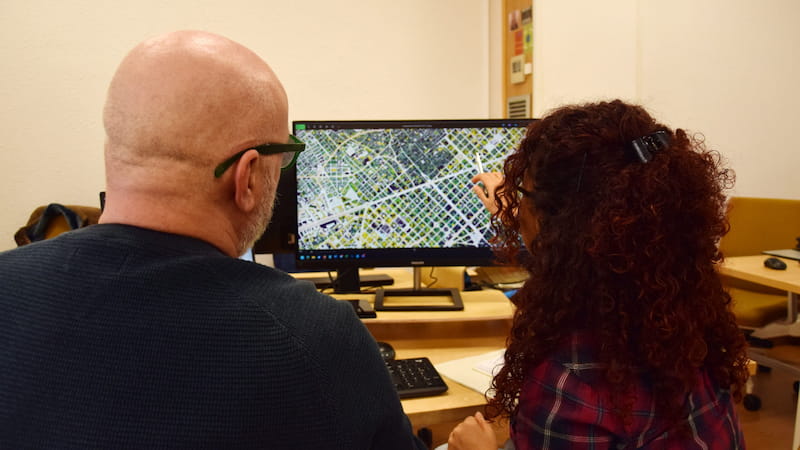




CIMNE researchers are applying computational fluid dynamics models coupled with particle-based models to the simulation of the flow of virus in the air produced by a sneeze. This research is carried out in close cooperation with the group of Professor Rainald Lohner at George Mason University in the USA. Prof Lohner, who is also the PI in this research activity, is an affiliated scientist to CIMNE where he spends 2-3 months research periods every year since 1995.
Simulation of the flow of virus after the sneezing of a patient laying in a bed in a hospital room. Courtesy of Prof. Rainald Lohner
These virus flow simulations will be useful for predicting the distribution of virus in the air in closed and open environments, such as hospitals and supermarkets, among others. These predictions will be more relevant in highly populated spaces, such as airports or crowded hospitals.
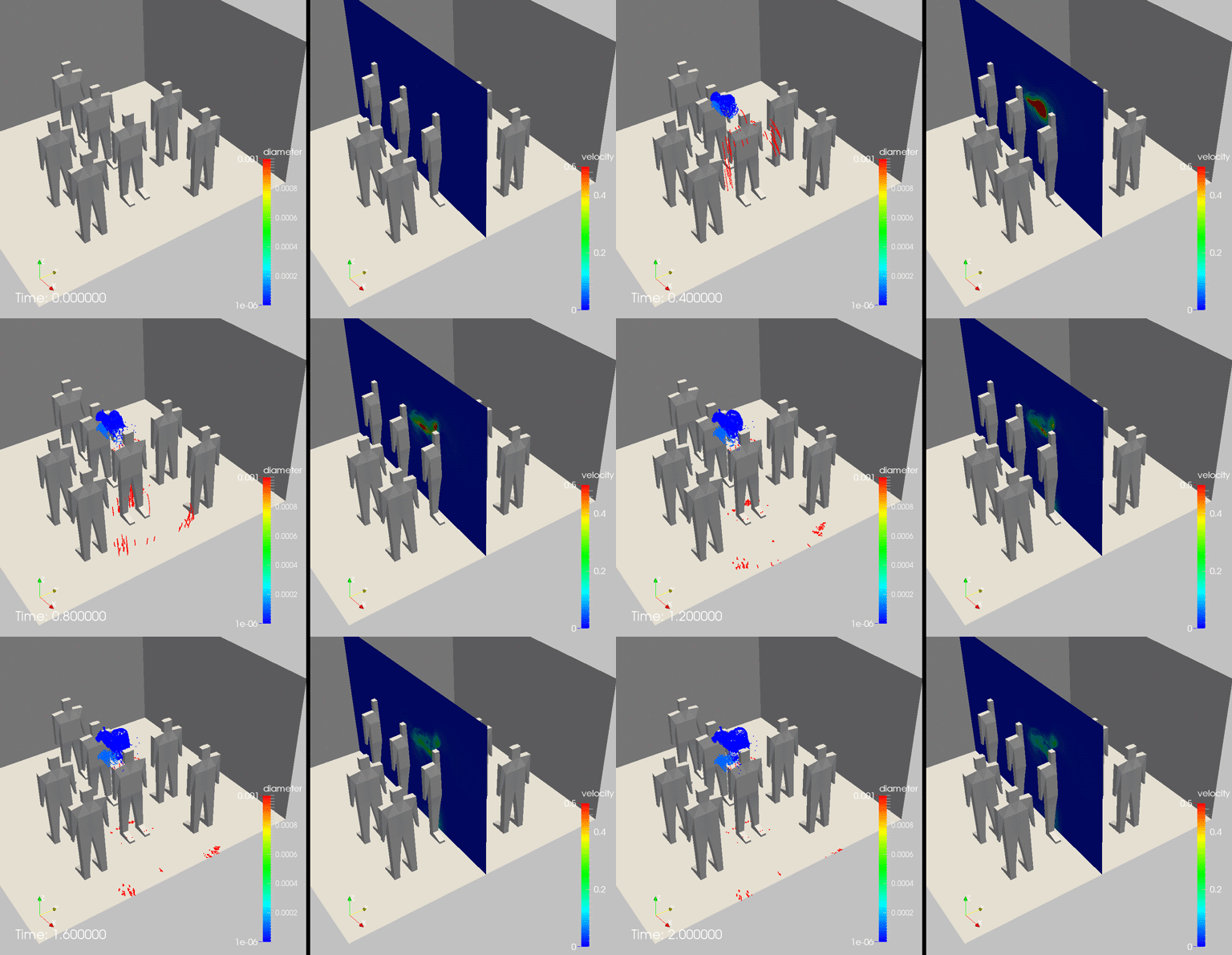
Simulation of the flow of virus after the sneezing of a person surrounded by a group of persons. Courtesy of Prof. Rainald Lohner
The problem is particularly important to face the challenges that the Covid-19 crisis is posing to society. Many doctors, nurses, TSA personnel etc. can be infected needlessly because airflow is poorly understood or neglected. In order for the virus not to spread through medical facilities infecting people, the airflow needs to be managed so that no particles from rooms with Codiv-19 patients leave those rooms.
Furthermore, by being able to predicting how the airflow inside high-risk rooms is, the medical staff could position themselves so that the chances of infection are minimized. By using simulation technology these flows can be computed and the airflow can be optimized so that further infections are minimized.