

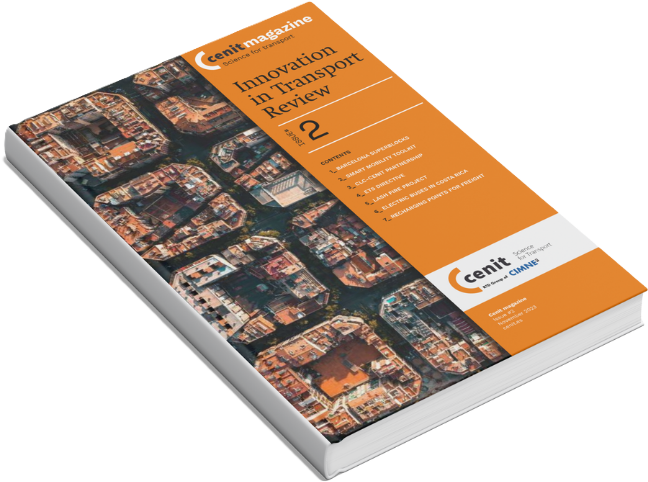
CIMNE’s Innovation Unit in Transport, CENIT, has published the second issue of Innovation in Transport magazine, offering a deep dive into smart and sustainable mobility solutions and cutting-edge transport research.
Articles in this issue
This second edition of the magazine features discussions on the future of maritime logistics and smart mobility, and the effect that autonomous vehicles could have on urban grids, among others.
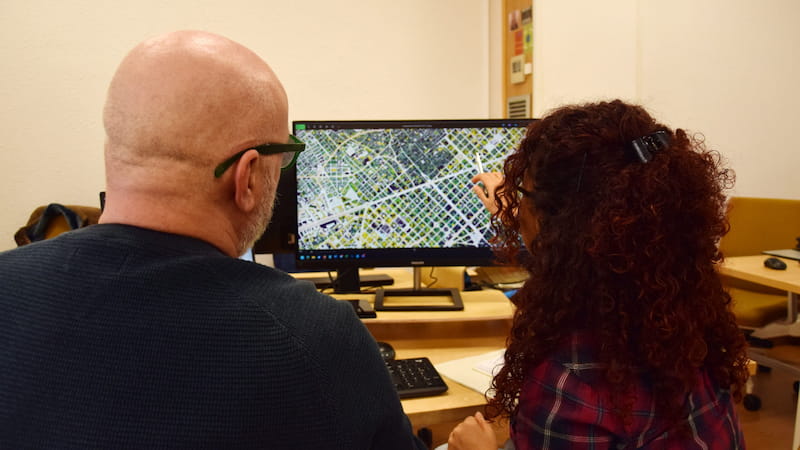
- Barcelona Superblocks — Samra Sarwar examines how integrating autonomous vehicles into Barcelona’s Eixample superblocks boosts traffic capacity, improves the level of service, and cuts generalized travel and social externality costs.
- Smart Mobility Toolkit — Sergi Saurí, Paola K. Rodríguez and Andrés Reyes Díaz present a Theory of Change-based toolkit and web tool to assess Smart Mobility readiness and design action plans that guide investments toward safer, greener, and more efficient urban transport.
- CLC-CENIT Partnership — Andrés Reyes Díaz outlines a CENIT–CLC collaboration, based in experiences in Singapore and Barcelona, to build a socio-economic indicator framework that helps policymakers evaluate sustainable mobility projects, align decisions with citizens’ wellbeing, and advance more liveable, low-carbon cities.
- ETS Directive — Javier Garrido, Maurici Hervas and Chiara Saragani analyse how including shipping in the EU carbon market may cut emissions but also trigger route reconfigurations, carbon leakage and competitiveness risks for European ports.
- Lash Fire Project — Francisco Rodero Blánquez and África Marrero del Rosario present a stowage planning tool that uses historical fire data and risk-based cargo placement to minimize ignition risk and support safer, regulation-ready ro-ro operations.
- Electric Buses in Costa Rica — Paola K. Rodríguez develops a financing model using trusts, leasing and private capital to deploy electric buses in San José, lowering TCO and advancing Costa Rica’s ambitious decarbonization targets.
- Recharging Points for Freight — Paco Gasparín Casajust proposes an optimization-based, two-phase rollout of refuelling and charging stations across Catalonia to ensure corridor coverage, minimize new sites, and support low‑carbon freight.