



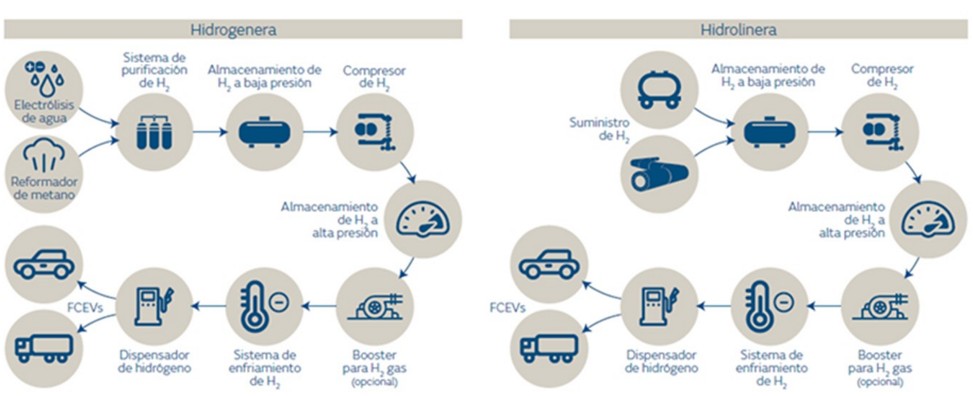
Diagram of hydrogen distribution stations for use in mobility: hydrogen and hydrolines. Source: www.energetica21.com
CENIT reviews Hydrogen as an alternative technology and prepares a practical guide for public transport implementation
We are all agreed on the need to reduce dependence on fossil fuels. There is no debate there. However, where we go from here is very much under the spotlight.
Technological advances have paved the way for the growth of the market for electric fuel cell buses powered by hydrogen. While this solution is viable at a technical level, it is often faced with practical implementation problems, either due to lack of infrastructure or regulatory aspects, amongst a whole range of other issues. To this we should add the uncertainty of how the technology itself may evolve over time. All such issues contribute to a significant level of uncertainty in the decision to purchase electric fuel cell buses powered by hydrogen.
In light of this the Metropolitan Transport Authority of Barcelona has commissioned CENIT to conduct a holistic overview of the current bus-related technology with hydrogen fuel cells to help operators and companies make a correct – and informed – decision with regards to procurement.
CENIT’s Paco Gasparin shares more detail “It’s been an eye opening experience, and we’re delighted that the results of our work will help operators and bus companies alike to understand the nature of hydrogen technology, the related infrastructure and its production components“.
Gasparin’s final work will include the benchmarking of international initiatives and numerous interviews with experts – without forgetting an exhaustive evaluation of the costs linked to the technology in question, and the risks and opportunities.