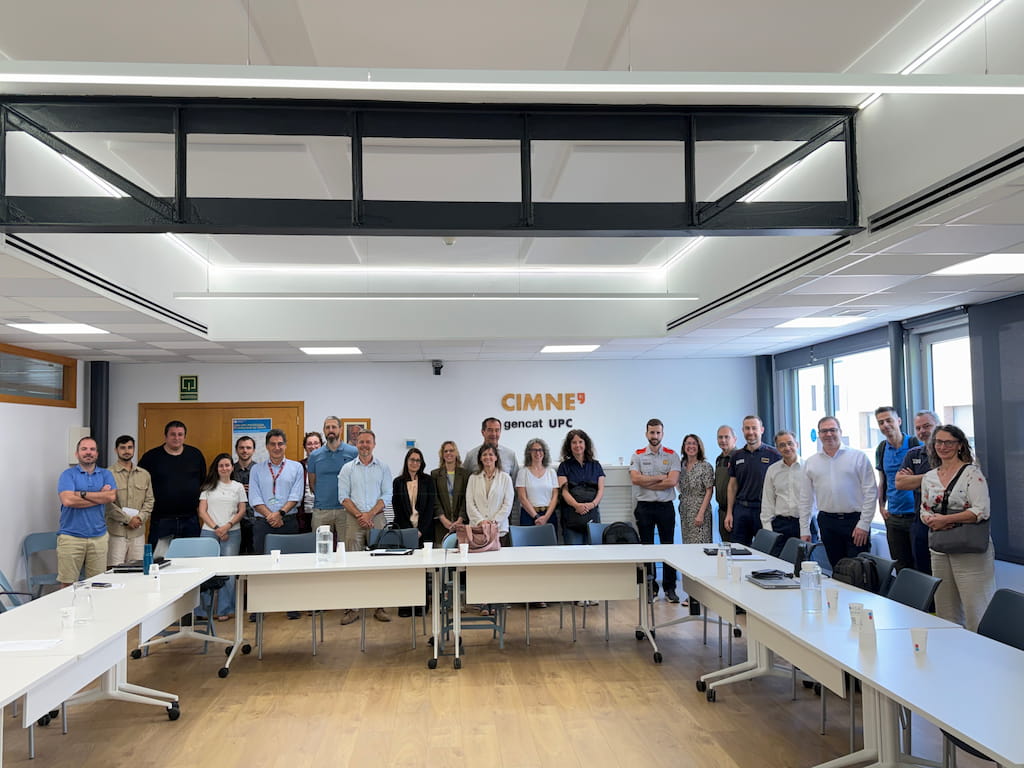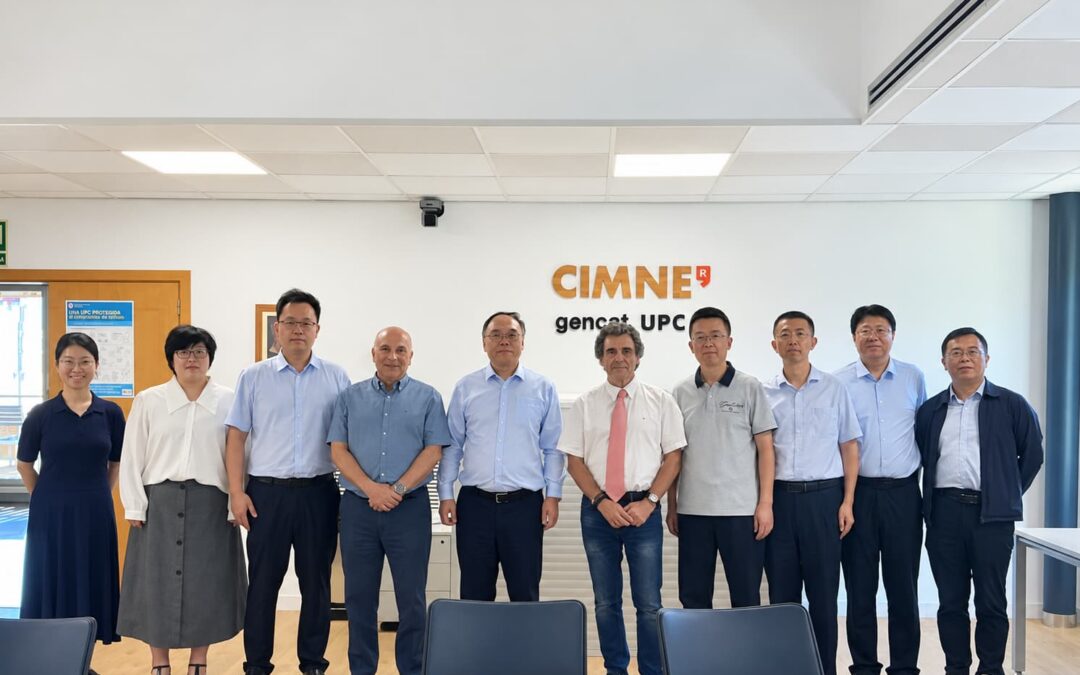
The International Centre for Numerical Methods in Engineering (CIMNE) and the Catalan Ministry of Home Affairs and Public Safety (Departament d’Interior i Seguretat Pública) have formally started exploring avenues for collaboration in the fields of emergency management, civil protection, and disaster risk reduction, bringing together advanced computational research and operational public safety expertise.
In a working meeting held on Tuesday, 2 June, at CIMNE’s headquarters in Barcelona, senior representatives from both institutions convened to present their respective capabilities and to identify potential areas of joint work.
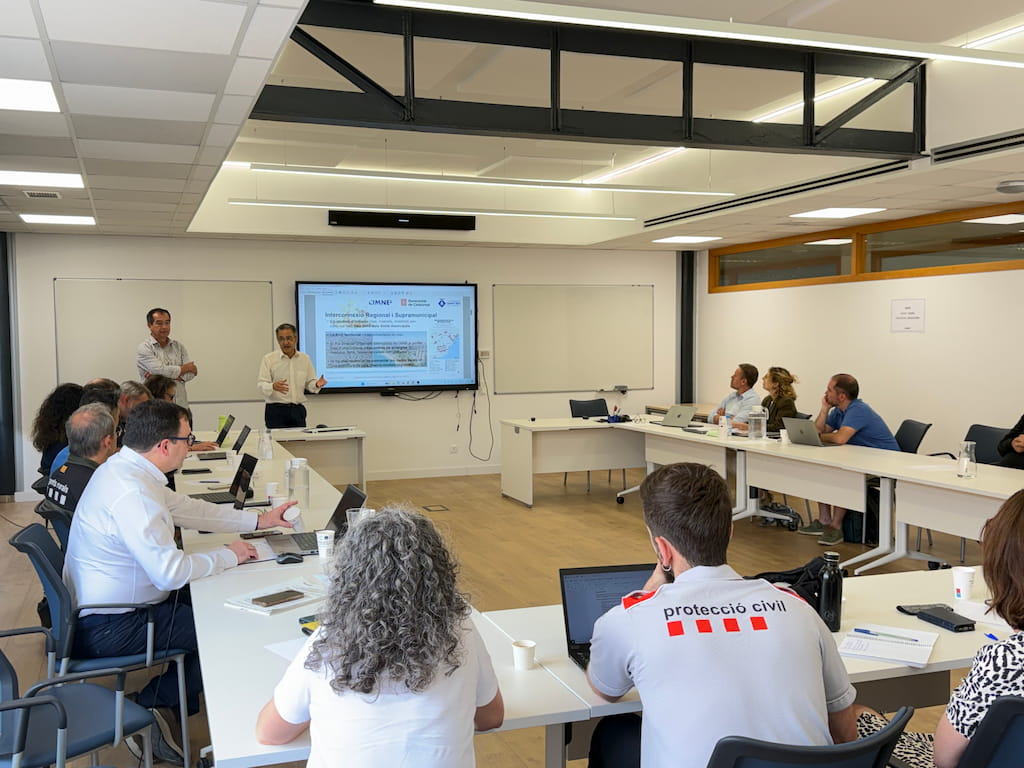
The session was hosted by CIMNE General Director, Prof. Javier Bonet, and attended by representatives from three key units of the Ministry: the Directorate General for Fire Prevention, Firefighting and Rescue (Direcció General de Prevenció, Extinció d’Incendis i Salvaments), the Directorate General for Civil Protection (Direcció General de Protecció Civil), and the Directorate General for Rural Agents (Direcció General d’Agents Rurals).
The session focused on CIMNE’s technological and research capabilities across a broad range of areas directly relevant to the Ministry’s mandate, including flood risk modelling, wildfire risk assessment and the urban-forest interface, seismic evaluation of critical infrastructure, landslide prediction, heatwave emergency platforms, and digital platforms for decision support based on hybrid artificial intelligence.
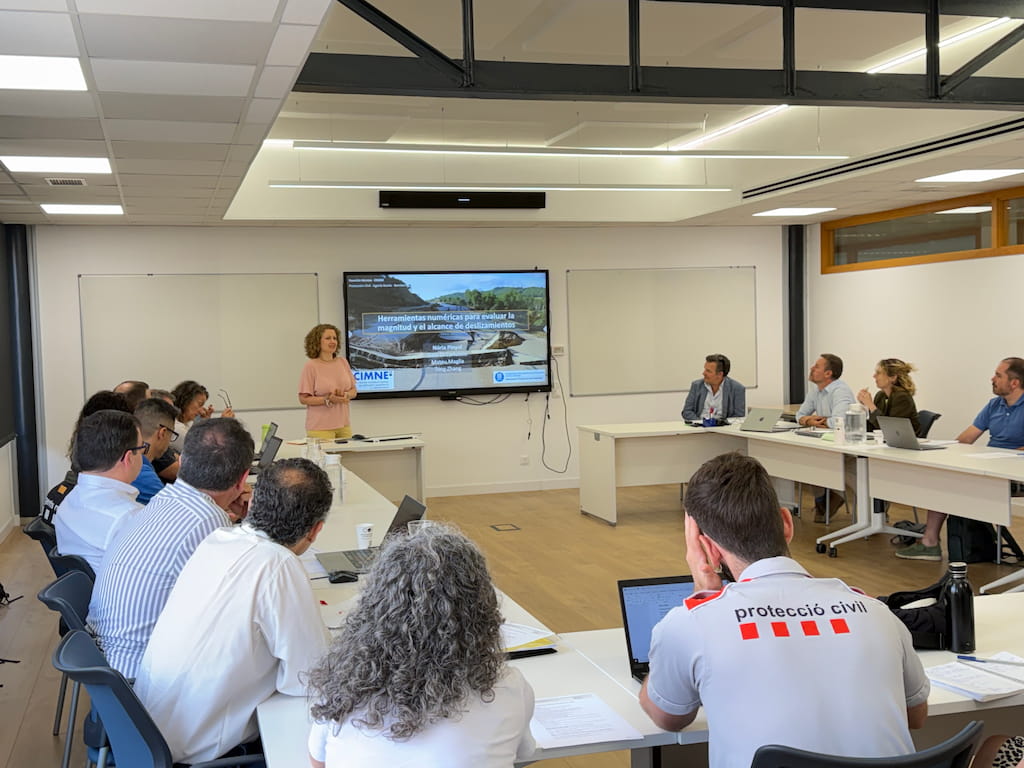
Researchers from several CIMNE research clusters and innovation units — including the FLUMEN Institute, Geomechanics and Hydrogeology, BEEGroup, DIGIT, Structural and Particle Mechanics, and the Resilience and Disaster Prevention group — presented their work alongside a dedicated session on opportunities for joint participation in European research and innovation programmes.
The exchange proved highly productive, fostering a rich dialogue between both institutions and allowing the identification of numerous potential opportunities for collaboration, technology transfer, and joint participation in innovation projects and European funding programmes oriented towards the prevention, management, and response to emergencies.
As a public research consortium jointly established by the Catalan Government, through the Departament de Territori, Habitatge i Transició Ecològica and the Universitat Politècnica de Catalunya — BarcelonaTech (UPC), CIMNE is uniquely positioned to support public institutions with advanced computational tools and scientific knowledge in the service of society.
Building on the positive outcomes of this first encounter, both organisations have pledged to continue collaboration efforts in the coming months, with a shared commitment to strengthening Catalonia’s capacity to prevent and respond to natural hazards and public safety challenges.