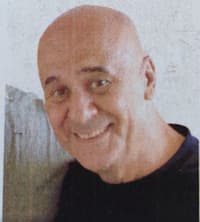
 Professor Carlos Agelet de Saracibar Bosch died in Barcelona on February 18th 2026, after a long fight with cancer.
Carlos was one of my first doctoral students, and the first who had previously been an undergraduate student at the School of Civil Engineering of Barcelona (hereinafter, the School of Civil Engineering) in the Universitat Politècnica de Catalunya (UPC). He began his doctoral thesis in 1986 and finished it in 1990.
Carlos was a brilliant student with a solid foundation, as well as a tireless worker and highly motivated by research — qualities he amply demonstrated during his doctoral studies. I would like to highlight the fact that Carlos readily accepted the challenge of solving in his thesis a problem seemingly far from his training as a civil engineer: the mathematical modelling and the computer simulation via the finite element method (FEM) of forming processes for thin metal sheets. These processes are used to manufacture metal parts for automotive and other vehicle body components, as well as in household appliances and packaging, among other applications. The objective of the FEM analysis is to accurately estimate how the initially flat sheet metal deforms under the impact of a punch that forces it into a mould, so that the resulting part has the desired dimensions and mechanical properties. The complexity of the FEM simulation of these processes lies in the large movements that occur in the sheet metal, which induce significant deformation and plasticity in the material during forming.
Carlos’s excellent training in mathematics, continuum mechanics and structural analysis, acquired at the School of Civil Engineering, enabled him to successfully tackle this problem. Thus, in his thesis, Carlos developed an original method for FEM analysis of sheet metal drawing processes using thin-shell theory, considering only the plastic deformation of the metal, since elastic deformations are very small in these processes.
I was personally very pleased that Carlos accepted the challenge of diving into research in a new field, from what is understood as traditional civil engineering, but one for which solution Carlos was very well prepared. His example paved the way for similar experiences among other doctoral students at the School of Civil Engineering and other universities in Spain.
The results of Carlos’s doctoral thesis were the starting point for subsequent research at CIMNE on FEM applications in sheet metal forming processes. The resulting software, called Stampack, was transferred to the market through the company Quantech ATZ SA, founded in 1996 by academics of the Strength of Materials and Structures group of the School of Civil Engineering, in collaboration with CIMNE. This software is still successfully used in many industrial applications in the thin metal forming sector internationally.
After completing his thesis, Carlos remained as a lecturer at the School of Civil Engineering, where, years later, he became a full professor in the area of Continuum Mechanics and Structures. His teaching was primarily in this field, and he also distinguished himself for his teaching skills.
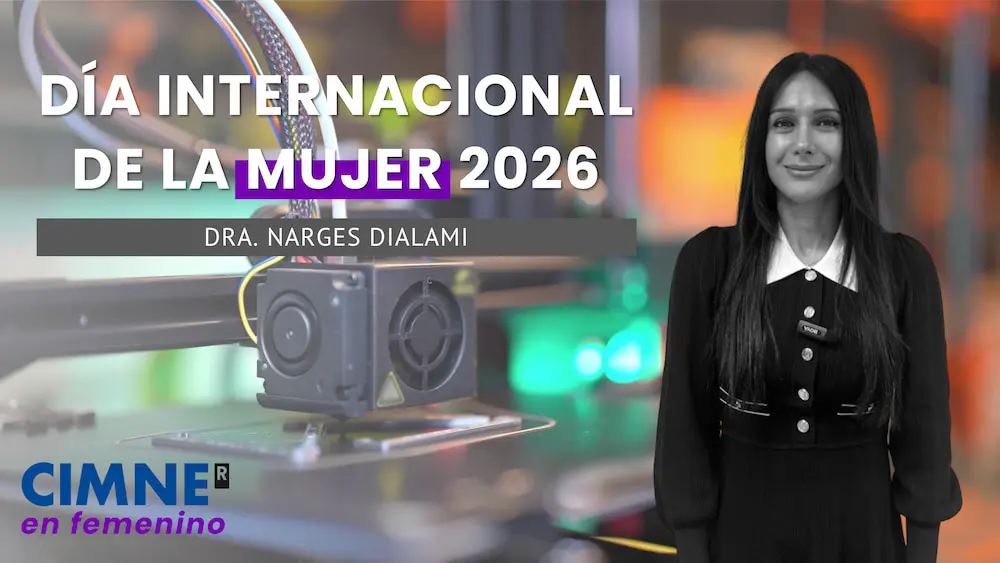
In the years following his doctoral thesis, Carlos’s research work was carried out as an affiliated researcher at CIMNE, initially focusing on the mathematical and numerical modelling, using the FEM, of frictional contact problems between deformable bodies. Afterwards, Carlos became involved in applying his knowledge of computational mechanics and the experiences gained from his thesis to the development of FEM-based simulation models for studying different metal forming processes, such as casting, friction stir welding and additive manufacturing (3D printing), among others. This research was carried out in close collaboration with academics from the School of Civil Engineering and researchers from CIMNE, such as Miguel Cervera, Michele Chiumenti, and Narges Dialami, with whom he published several scientific papers, among others. This research has contributed to making CIMNE and the UPC international leaders in the field of numerical simulation of metal forming processes. This line of research remains highly relevant in Barcelona today and has a significant impact on industry both nationally and internationally.
Carlos actively participated in the social life of the School of Civil Engineering in the early 2000s. Along with his wife, Teresa, and their son, also named Carlos, they never missed the frequent social events. Among these, I would highlight the “asados” (barbecues) organised by a group of Argentine researchers from CIMNE, led by ICREA Research Professor Sergio Idelsohn, in collaboration with doctoral students from the School of Civil Engineering and other groups at UPC. These asados were held every spring in the gardens of Torre Girona, which at that time housed the School of Civil Engineering and is now the UPC Rectorate. These experiences, along with his father’s academic activity, likely encouraged Carlos Jr. to study at UPC, where he graduated as an architect years later. He currently enjoys a successful career as an architect based in Miami.
Finally, I would like to mention Carlos’s involvement in organising thematic sessions on the simulation of industrial forming processes at numerous international scientific conferences. He carried out this task in collaboration with several prestigious scientists in the field of computational mechanics. I highlight his close relationship, spanning decades, with Professor Jean-Philippe Ponthot of the University of Liège.
Carlos is a distinguished representative of the first generation of professors and researchers trained at the School of Civil Engineering of UPC. Thanks to him, this School and the R&D centres it spawned, such as CIMNE, and by extension the UPC itself, have achieved international prestige in both research and teaching. Carlos’s personal experience has motivated many young engineering graduates to pursue careers as researchers in fields seemingly far from their initial training, contributing to solving problems of interest to the progress of society, as was the case with Carlos. May he Rest in Peace.
Eugenio Oñate
Emeritus Professor at School of Civil Engineering in UPC
Senior Distinguished Researcher and founder of CIMNE