
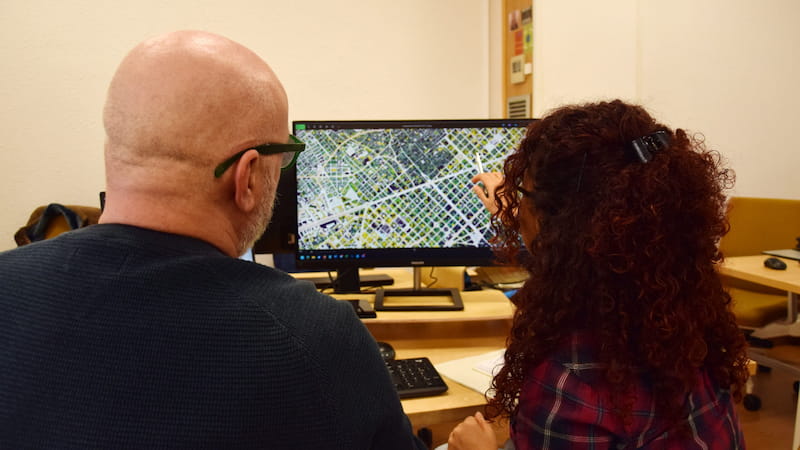



The International Centre for Numerical Methods in Engineering (CIMNE) has unveiled a cutting-edge machine learning model designed to predict high-resolution electricity demand in Catalonia, addressing the challenges posed by climate change and increasing electrification across economic sectors. This initiative is part of Destination Earth, an ambitious EU initiative to design a digital twin of our planet.

Tackling Emerging Energy Challenges
In 2021, households accounted for 27.4% of the EU’s final energy consumption, with commercial and industrial buildings pushing this figure to nearly 70%. Additionally, electric vehicle (EV) sales in Europe have risen dramatically, with a compound annual growth rate of 61% between 2016 and 2021. These trends, coupled with the growing penetration of renewable energy sources (RES), highlight the urgent need for sophisticated demand-supply forecasting to prevent power outages and support clean energy generation.
Climate change further complicates the energy landscape, with extreme weather events causing fluctuations in both electricity demand and supply. These dynamics underscore the importance of predictive models tailored to specific regions, such as Catalonia, which is transitioning toward a decentralized energy network reliant on renewable resources.
Machine Learning Solution
The CIMNE team, led by Dr. Gerard Mor, from the Innovation unit in Building, Energy and Environment (BEE Group), employed a scalable machine learning approach using the XGBoost algorithm on a Dask cluster. Unlike traditional time-series models requiring separate configurations for each location, this method leverages a unified model, enhancing efficiency and scalability. The solution incorporates features like Heating Degree Days (HDD) and Cooling Degree Days (CDD) to better account for temperature-driven energy demands.
Data sources for the model include:
-
Historical climate data from ERA5 Land
-
Energy consumption data from Datadis
-
Socioeconomic statistics from Spain’s National Institute of Statistics (INE)
-
Electricity pricing from Esios
-
Building information from the INSPIRE harmonized dataset
Initial testing achieved a Coefficient of Variation of the Root Mean Square Error (CVRMSE) of 19.7%, which was improved to 7.95% after hyperparameter optimization. This robust performance is bolstered by a cross-validation process ensuring reliability across diverse data subsets.
Key Outcomes and Future Applications
The predictive model offers a detailed characterization of electricity demand in Catalonia, including short-term forecasts for extreme weather scenarios and long-term projections for 2026. It also features a user-friendly visualization platform, built with technologies like Plotly and Streamlit, enabling stakeholders to analyze energy trends and plan accordingly.
This initiative represents a significant step toward the creation of a comprehensive digital twin of Catalonia’s electricity distribution network. Such advancements are crucial for adapting to the decentralized, renewable energy-driven paradigm shift while addressing the impacts of climate change.
About Destination Earth
The International Centre for Numerical Methods in Engineering (CIMNE) has been selected as a partner for the Destination Earth initiative, a program by the European Commission to develop a highly accurate digital model of the Earth on a global scale to aid Europe’s “green transformation”. By combining real-time observations with previous data pools, experts are developing highly accurate replica of complex Earth systems, giving special attention to extreme weather events and the effects of climate change.
Destination Earth is jointly coordinated by the European Organisation for the Exploitation of Meteorological Satellites (EUMETSAT), the European Space Agency (ESA), and the European Centre for Medium-Range Weather Forecasts (ECMWF), with financial support provided by the European Commission.