

CENIT heads up innovative pilots to create foundations for a fossil-fuel free transportation zone business model for small businesses
The post-pandemic growth of e-commerce has raised concerns about the viability of small businesses being able to survive in a fossil-fuel free transportation zone. The pilot study – led by Barcelona Metropolitan Area (AMB) with consortium members from Sweden and the Netherlands and funded by EIT Urban Mobility and Horizon Europe – aims to create a test bed to help small businesses by incorporating them into the business model using cargo bikes and dynamic publicity.
As we discussed in our recent article Practical procurement guide for public transport buses – Cenit | Science for Transport a quarter of all man-made CO2 emissions are produced by transport, leading to an unsustainable and intolerable situation in our cities and metropolitan areas. With increasing restrictions being placed on the access to cities – large and small – in an attempt to reduce congestion and pollution there are of course winners and losers: small businesses that cannot adapt their fleet to the LEZ immediately being adversely affected by the new legislation.
Our joint mission is to create a solution for the last mile delivery operators that do not own, and are unlikely in the short-term to be able to afford, a low emissions fleet by creating cycle logistics hubs.
Let’s take a look at the two cities in question.
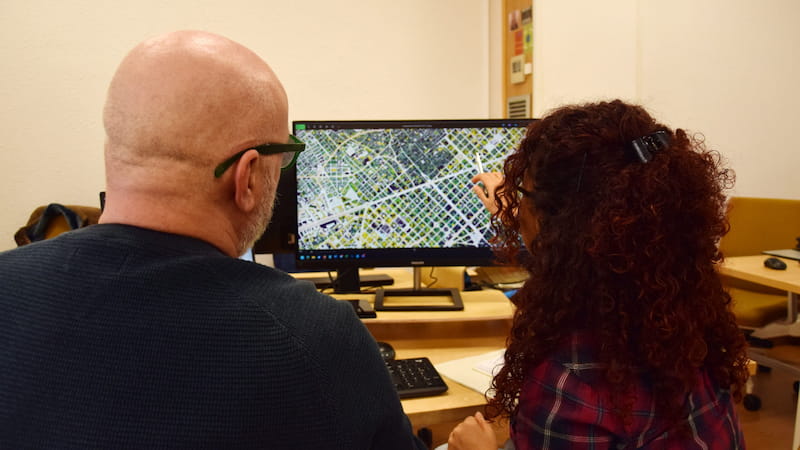
Barcelona’s Low Emissions Zone (LEZ) came into force last year for private vehicles and this year it will also be applied to freight transport. The main challenge for the AMB – in charge of managing and the planning of all mobility services in Barcelona’s 3.2 million metropolitan area – is to create two shared urban consolidation and distribution centres (UCDC) on the borders of Barcelona’s LEZ. The idea being to create cycle logistics hubs that will start the transition from conventional freight to electric vehicles (cargo bikes and small e-vehicles).
Stockholm on the other hand has a LEZ, however is considering additional access requirements since the city aims to be fossil-fuel free by 2030. Here the project has a similar aim, seeking to identify locations, methods and stakeholders who can work together to achieve fossil-fuel free deliveries and improve logistics in the urban environment.
So the future is looking somewhat brighter. And the idea is to replicate the business model to other cities. At CENIT our experienced researchers in optimization of freight distribution routes, urban mobility, and smart city solutions we will be offering a toolkit and consultancy services related to location to future hubs and cities and will be responsible for the service commercialization.